Celebrity Reaction Ignites National Debate After Texas Murder Verdict
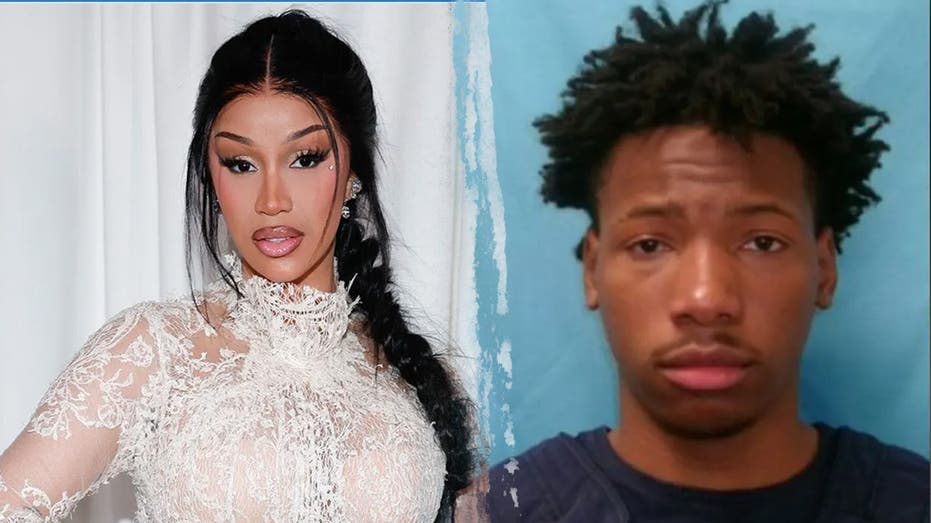
The guilty verdict in the high-profile murder trial of Karmelo Anthony has sparked intense nationwide reaction, with millions weighing in across social media and cable news. But when Grammy-winning rapper Cardi B publicly condemned the outcome, the controversy surged to another level — drawing fierce criticism and reigniting debate about crime, accountability, and celebrity influence in America’s justice system.
Anthony, 19, was found guilty and sentenced to 35 years in prison for the fatal stabbing of 17-year-old Austin Metcalf during a high school track meet in April 2025. The incident took place at Kuykendall Stadium in Frisco, Texas, a fast-growing North Texas city known for its family-centered communities and highly regarded schools.
What began as a courtroom matter quickly became a cultural flashpoint — particularly after Cardi B declared the verdict “disgusting” in a viral social media post that garnered roughly 10 million views.
The Crime That Shook a Community
The fatal altercation occurred near a team tent during a school track meet at Kuykendall Stadium, which is operated by the Frisco Independent School District. According to trial testimony, Anthony stabbed Metcalf in the chest during a confrontation between the two teens.
Metcalf, just 17 years old at the time, succumbed to his injuries. The tragedy sent shockwaves throughout Frisco and beyond, raising concerns among parents about school safety and youth violence. What should have been a routine sporting event — a gathering meant to showcase student athletic achievement and teamwork — became a devastating crime scene.
Prosecutors charged Anthony under Texas law with murder. The statute governing such charges is outlined in the Texas Penal Code, Section 19.02, which defines murder and the applicable penalties. After trial proceedings that included arguments over self-defense and the circumstances surrounding the altercation, the jury delivered a guilty verdict.
Anthony was sentenced to 35 years in prison — a punishment that reflects both the severity of the crime and the jury’s rejection of the defense’s claims.
The Self-Defense Argument and Jury Decision
Much of the defense strategy reportedly centered on a claim of self-defense — a legal protection that exists under Texas law in certain circumstances. However, self-defense claims must meet specific legal thresholds, including clear evidence that the accused reasonably believed deadly force was immediately necessary to protect against another’s use of unlawful deadly force.
The jury was tasked with weighing the facts presented in court, including witness testimony, physical evidence, and legal instructions from the judge. After deliberation, jurors concluded that Anthony’s actions did not meet the legal standard required to justify lethal force.
That decision affirmed a foundational principle in American jurisprudence: the right to defend oneself exists, but it is not unlimited. The justice system relies on juries — ordinary citizens — to apply the law impartially after reviewing evidence.
For Metcalf’s family and supporters, the verdict represented accountability. For others, it became a lightning rod for political and cultural debate.
Cardi B’s Post Goes Viral
Shortly after the verdict was announced, Cardi B posted on X (formerly Twitter):
“Wow! Just freakin wow! DISGUSTING… This is not justice, this is trying to make an example!!!”
The post immediately generated intense engagement — tens of thousands of comments and millions of views. While some users echoed her sentiments, many others criticized the rapper for condemning a jury’s decision in a case involving the death of a teenager.
Cardi B, who has built a massive following and influence in the entertainment industry, has frequently spoken out on political and social issues. With that level of visibility, however, comes enormous cultural reach — and scrutiny.
Conservative Voices Respond
The backlash was swift, particularly from conservative commentators who framed the issue as a matter of basic accountability.
Tomi Lahren, political commentator and host of “Tomi Lahren Is Fearless,” responded pointedly:
“Yes, the example is, don't stab somebody in the chest. Thanks for playing.”
Lahren’s comment encapsulated the position held by many Americans who believe the verdict reinforces a fundamental social rule: lethal violence has consequences.
Others joined the discussion, including social media personality Matt Van Swol, who mocked the suggestion that punishment was unjust. Zeek Arkham, identified as a former officer of the New York City Police Department, also criticized the notion that holding someone accountable for a fatal stabbing constitutes injustice.
The clash of viewpoints quickly escalated into broader commentary about crime policy, race, celebrity activism, and media narratives.
A Larger Cultural Debate About Justice
This case — while specific in its facts — intersects with larger national conversations about violent crime and how communities respond to it.
Over the past several years, Americans have engaged in heated debate over:
- The boundaries of self-defense laws in various states
- The appropriate sentencing standards for violent offenses
- The role of race in criminal justice outcomes
- The responsibility of public figures when commenting on active legal matters
Texas, in particular, has strong legal doctrines protecting self-defense rights. However, those protections are not a shield for every altercation. Jurors must determine whether deadly force was proportionate and justified under the circumstances.
Supporters of the verdict argue that failing to convict in such a case could send a dangerous message — especially in environments like schools and athletic events, where safety should be paramount.
The Human Cost
Lost amid viral tweets and political sparring is a sobering fact: a 17-year-old young man lost his life.
High school track meets are supposed to represent opportunity — scholarships, friendships, teamwork, and community pride. Instead, this event became a scene of irreversible loss. Families, classmates, and teammates continue to live with that trauma.
While debates over sentencing length and legal nuance dominate headlines, the emotional toll on loved ones remains incalculable. For them, the case is not a social media controversy — it is a permanent absence at the dinner table and in the stands.
The Influence — and Responsibility — of Celebrity Speech
In the digital age, celebrity commentary can shape public perception within minutes. With millions of followers, artists like Cardi B command audiences larger than many news networks.
That reality raises important questions:
- Should public figures exercise restraint when commenting on jury verdicts?
- Does viral outrage undermine public trust in courts?
- Or does open criticism reflect healthy democratic discourse?
Free speech protections are sacrosanct in America. The First Amendment guarantees citizens — celebrities included — the right to express opinions on public matters. At the same time, critics argue that dismissing jury decisions as illegitimate without engaging the facts risks eroding confidence in the system.
American juries are composed of everyday citizens who take oaths to deliberate fairly. When their verdict is characterized as inherently unjust, it can inflame tensions — particularly in already polarized environments.
The Rule of Law and Equal Accountability
At the core of the controversy is a foundational American principle: equality before the law.
The United States legal system does not predicate guilt or innocence on fame, race, or political alignment. The Justice Department — and state prosecutors across the country — operate under constitutional frameworks designed to ensure due process. Texas courts, like others nationwide, rely on adversarial hearings and jury findings to establish accountability.
For many Americans, the Anthony verdict is seen not as “making an example,” but as upholding a standard: violent actions, when proven beyond a reasonable doubt, carry consequences.
This viewpoint holds that justice functions properly when juries apply statutory law consistently, regardless of external social pressures or cultural debates.
Where the Story Goes From Here
It remains possible that appellate proceedings could follow, as is common in serious felony cases. Appeals focus on procedural or legal errors that may have occurred during trial — not simply disagreement with the outcome.
Meanwhile, public discussion will likely continue to ripple across platforms, as viral posts keep the story in circulation.
Fox News Digital has reportedly reached out to Cardi B’s team for additional clarification regarding her remarks. As of now, no extended explanation has been made public.
A Nation Watching — and Reflecting
America is no stranger to heated public discourse. Our republic is built on debate, dissent, and competing interpretations of justice. But events like this remind us that digital reactions can sometimes overshadow core truths.
A jury heard evidence and delivered a verdict. A family mourns a son lost too soon. A young man faces decades behind bars for a decision that changed multiple lives forever.
In that reality lies a sobering lesson: actions have consequences. The courtroom may conclude its proceedings, but the broader cultural dialogue about crime, responsibility, and celebrity influence shows no signs of slowing down.
For many Americans, one principle stands firm — our justice system works best when juries apply the law carefully, evidence is weighed impartially, and accountability is not swayed by viral outrage or star power.
In the end, the debate sparked by a single social media post reveals something larger: a nation continuously wrestling with how to balance free expression, public influence, and the enduring promise of equal justice under law.