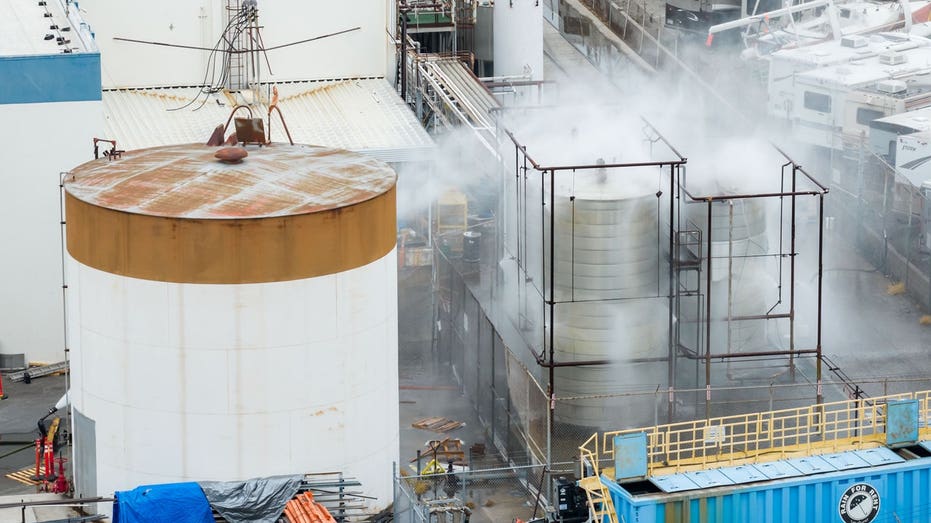
Southern California Community Returns Home After High-Stakes Chemical Emergency
After several days of uncertainty, anxiety, and intense emergency response efforts, all evacuation orders connected to the hazardous materials crisis at a Southern California aerospace plant have officially been lifted. Roughly 50,000 residents in and around Garden Grove, located in Orange County, California, are now cleared to return home following what officials described as a narrowly averted industrial disaster.
The incident, centered on a compromised chemical storage tank at GKN Aerospace Transparency Systems, tested emergency preparedness at the local and state level. It also reignited deeper questions about industrial safety, zoning, and government oversight in communities where advanced manufacturing facilities operate close to residential neighborhoods.
What Happened at the Garden Grove Aerospace Facility?
The emergency began when authorities responded to reports of vapor emissions from a storage tank at the aerospace manufacturing plant. The facility produces engine structures and specialized components for commercial and military aircraft, placing it squarely within America’s critical defense and aviation supply chain.
Inside one of the plant’s storage tanks sat approximately 7,000 gallons of methyl methacrylate (MMA), a highly flammable chemical widely used in manufacturing plastics, coatings, and composite materials. According to the U.S. Environmental Protection Agency (EPA), MMA can pose serious health risks and presents fire and explosion hazards under certain conditions.
Orange County Fire Authority (OCFA) crews quickly determined that a cooling system failure may have allowed heat to build up inside the pressurized tank. Orange County Fire Authority Chief TJ McGovern of the Orange County Fire Authority said investigators believe the system that regulated tank temperature stopped functioning, though the exact cause remains under investigation.
“We don’t yet know why the cooling system failed,” McGovern explained publicly, “but once it stopped, temperature climbed inside the tank — and that is what triggered this entire event.”
Escalating Temperatures and Evacuation Orders
As temperatures rose inside the tank, the risk of a catastrophic rupture or explosion became very real. Authorities made the difficult but necessary decision to order evacuations in stages, ultimately impacting around 50,000 residents across Garden Grove and surrounding neighborhoods.
Emergency management officials expanded the evacuation perimeter as conditions evolved, prioritizing safety and precaution over risk. Families were forced to leave their homes over Memorial Day weekend, one of the busiest travel periods of the year. Shelters were established, and law enforcement ensured restricted access to affected zones.
At one point, roughly 16,000 residents remained displaced even after partial orders were lifted. The scale of the evacuation was one of the largest in Orange County in recent memory.
- Approximately 50,000 residents initially fell within evacuation zones
- 16,000 residents remained under orders at the peak of the crisis
- 7,000 gallons of MMA were stored in the compromised tank
- Interior tank temperatures climbed near 100 degrees before stabilizing
Despite widespread concern, essential operations at nearby landmarks, including Disneyland Resort, were allowed to continue as emergency officials adjusted safety perimeters based on real-time data.
The Crack That Prevented Catastrophe
In an ironic twist, officials said a crack that formed in the tank over Memorial Day weekend actually relieved internal pressure, helping avert what could have become a devastating explosion. While a damaged tank is normally a sign of increasing danger, in this case the fracture allowed pressure to dissipate in a controlled way.
Fire crews continued aggressive cooling operations, spraying water externally and deploying a sprinkler system to reduce temperatures. Company specialists worked alongside firefighters, removing insulation from the tank to allow faster cooling.
The decisive moment came when the tank’s temperature stabilized at approximately 92 degrees — down from near 100 degrees — and remained steady for four hours without sprinkler assistance. That stability gave emergency officials confidence to lift the final evacuation order.
“All residents will go home,” said Orange County Fire Authority Division Chief Craig Covey during a community meeting, marking the official end of the evacuation phase.
Health Risks of Methyl Methacrylate (MMA)
Methyl methacrylate is commonly used in manufacturing plastics, resins, and acrylic products. While valuable in industrial applications, it carries health and environmental risks when improperly contained.
According to guidance published by the EPA on MMA, potential exposure can cause:
- Respiratory irritation and breathing difficulty
- Headaches and neurological symptoms
- Skin and eye irritation
- Throat inflammation
Fortunately, health monitors reported no hazardous airborne concentrations during the incident. Officials emphasized that air quality readings remained within acceptable safety thresholds throughout the crisis.
Nevertheless, authorities confirmed that air quality, storm drains, and sewer systems will continue to be monitored for months to ensure no delayed contamination occurs. Such long-term monitoring is standard protocol following significant chemical containment failures.
Governor Declares State of Emergency
As temperatures rose and the threat level intensified, California Governor Gavin Newsom declared a state of emergency in Orange County. The declaration allowed greater coordination among agencies and faster mobilization of resources.
Emergency crews shifted from defensive containment — essentially holding the line and cooling the tank — to what officials described as “offensive operations.” These higher-risk measures aimed to proactively stabilize conditions and reduce the probability of an uncontrolled explosion.
While the emergency declaration has now been lifted along with evacuation orders, the episode demonstrates how quickly local incidents can escalate into state-level events requiring multi-agency coordination.
Community Frustration and Calls for Accountability
As evacuees return home, many are asking hard but fair questions. Why was such a large volume of flammable chemical stored near residential neighborhoods? What redundancies were in place to prevent cooling system failures? And who will be held accountable if compliance gaps are discovered?
Garden Grove Mayor Stephanie Klopfenstein made clear that the city intends to closely examine the company’s safety practices. Residents at public meetings voiced concern that industrial storage risks may not have been fully communicated to nearby homeowners.
GKN Aerospace issued a formal apology, stating that its top priority remains the safety of the surrounding community and that it will continue working closely with authorities. The company’s Transparency Systems division supports aerospace manufacturing vital to both civilian aviation and U.S. military operations.
The tension highlights an ongoing nationwide challenge: balancing economic growth, manufacturing capability, and industrial safety with the rights and security of local communities.
The Bigger Picture: Industrial Safety in America
America’s industrial base is a pillar of national strength. From aerospace to energy to advanced manufacturing, factories and production plants power both our economy and our national defense. Companies like GKN Aerospace operate within a highly technical and federally regulated environment.
However, this incident underscores why rigorous adherence to safety standards is non-negotiable. Oversight from agencies such as the Occupational Safety and Health Administration (OSHA) and the EPA exist to protect both workers and the surrounding public.
When mechanical systems fail — particularly cooling systems for volatile chemicals — the consequences can escalate rapidly. The Garden Grove emergency serves as a reminder that:
- Preventive maintenance and redundant safeguards are essential
- Immediate, transparent communication builds public trust
- Evacuation planning and emergency drills save lives
- Coordination between local and state agencies is critical
The successful containment of this incident demonstrates that, when activated effectively, America’s emergency response infrastructure works. Firefighters, hazardous materials teams, law enforcement, and local officials acted quickly and decisively.
Residents Return — But Oversight Continues
With evacuation orders lifted, life in Garden Grove is gradually returning to normal. Families are re-entering homes, businesses are reopening, and neighborhoods are regaining a sense of calm after days of uncertainty.
Still, investigations are ongoing. Fire officials have made clear that determining exactly why the cooling system stopped functioning is a priority. Engineers now have full access to the tank and mechanical systems for deeper forensic evaluation.
Authorities are also evaluating municipal planning considerations, industrial permitting practices, and emergency response protocols to identify potential improvements.
“There’s definitely more to come in terms of understanding what caused this event,” Chief McGovern said, underscoring that the technical analysis has just begun.
A Close Call That Deserves Serious Reflection
The Garden Grove chemical tank crisis could have ended very differently. Had temperatures continued rising or had the tank experienced a violent rupture, the surrounding residential areas could have faced widespread structural damage, fires, and serious health risks.
Instead, a combination of mechanical pressure relief, coordinated emergency action, and cautious evacuation likely prevented catastrophe.
For 50,000 Californians, the experience was a stark reminder of how interconnected modern industry and daily suburban life have become. For policymakers and regulators, it is a warning that safety cannot simply be assumed — it must be continually verified.
As America continues to strengthen its manufacturing capabilities and rebuild its strategic industrial base, especially in aerospace and defense, safety systems and community protections must evolve alongside technological advancement.
In Garden Grove, residents are home again. But the lessons from this crisis — about preparedness, oversight, and accountability — should resonate far beyond Orange County.
At Wake Up America News, we believe economic strength and public safety go hand in hand. The American people deserve both thriving industry and uncompromising protection of their communities.