Kansas City’s Legendary Barbecue Prepares to Welcome the World
As the United States gears up to co-host the largest soccer tournament in history, cities across the country are preparing for a historic wave of international tourism. The 2026 FIFA World Cup will span North America, bringing millions of visitors to stadiums and streets throughout the United States, Canada, and Mexico.
In the heartland, Kansas City is ready. And not just with stadium lights and hotel rooms — but with smoke, sauce, and a distinctly American flavor.
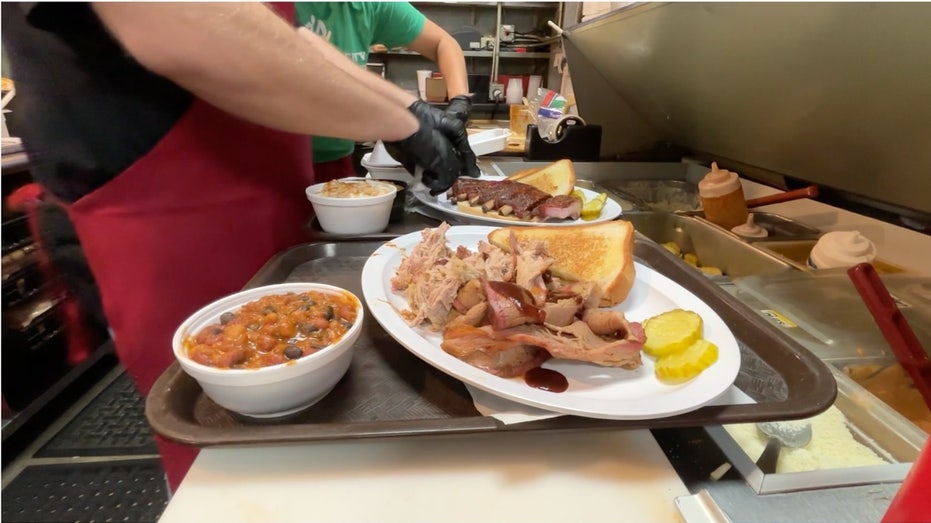
At the center of the city’s culinary welcome stands Joe’s Kansas City Bar-B-Que, an iconic restaurant operating out of a former gas station in Kansas City, Kansas. Known nationwide for its burnt ends, slow-smoked brisket, and the legendary Z Man sandwich, Joe’s is preparing for what could be the busiest and most important stretch in its storied history.
World Cup 2026: A Historic Opportunity for American Cities
The 2026 tournament will be unlike any before it. For the first time, 48 national teams will compete across 104 matches — the most expansive format in World Cup history. According to FIFA, host cities across the three nations expect a tourism and economic surge measured in the billions of dollars.
Kansas City is among 16 North American host cities selected for this global showcase. The city will host six matches, including a highly anticipated quarterfinal — a milestone moment for the region and a proud chapter in its sports legacy.
Matches in the Kansas City area will be held at GEHA Field at Arrowhead Stadium, home of the Kansas City Chiefs. Arrowhead has long been regarded as one of the loudest and most electrifying venues in American sports — and it will now welcome fans from every corner of the globe.
The tournament officially kicks off on June 11, 2026, in Mexico City. But for heartland America, the real story may unfold off the field — in restaurants, small businesses, hotels, and historic neighborhoods ready to greet the world.
A Gas Station Turned Culinary Landmark
Joe’s Kansas City Bar-B-Que didn’t start as a corporate chain or flashy destination restaurant. It began as a humble operation inside a gas station — and that unpretentious authenticity has become part of its enduring appeal.
Over the years, Joe’s has earned a reputation as one of America’s premier barbecue spots. Food critics and everyday customers alike praise its perfectly executed smoked meats and signature sauces. The restaurant’s Z Man sandwich — featuring brisket, provolone cheese, two crispy onion rings, and barbecue sauce on a kaiser roll — has become a bucket-list item for barbecue enthusiasts nationwide.
Now, that local institution is preparing to meet global demand.
Preparing for a Surge Unlike Any Before
Victor Brummel, general manager at Joe’s flagship gas station location, knows what big crowds look like. The restaurant has weathered Super Bowl victories, playoff runs, and major city events — often with lines snaking out the door.
But the World Cup presents a different scale of opportunity.
On an average heavy-production day, Joe’s might smoke around 185 slabs of ribs. For World Cup crowds, the team estimates they could nearly double that — preparing roughly 400 slabs per location to keep up with international visitors eager to taste authentic Kansas City barbecue.
That kind of increase requires serious logistical planning. Joe’s is:
- Expanding meat preparation capacity
- Adjusting staffing levels to accommodate longer operating hours
- Increasing supply chain coordination to prevent shortages
- Opening on Sundays during tournament matches — a rare move for the restaurant
In fact, management notes that the only recent exception to their traditional Sunday closure policy came during another iconic American sports moment: the Kansas City Chiefs’ Super Bowl runs led by quarterback Patrick Mahomes.
When Mahomes and the Chiefs took the field, Kansas City showed up — and Joe’s responded by adapting to demand. Now, with the World Cup coming, the restaurant is preparing to do it again, this time for a global audience.
Tourism Ripple Effects Across the Metro
The impact of the World Cup will extend far beyond the stadium gates. According to the Kansas City Sports Commission and Visit KC, the region anticipates hundreds of thousands of out-of-town visitors during match days, with many fans traveling between multiple host cities across North America.
That means Kansas City won’t just welcome one wave of tourists — but repeated surges as fans follow their national teams from city to city.
Restaurants like Joe’s are uniquely positioned to benefit. International travelers increasingly seek out “authentic local experiences” when visiting the United States. For Kansas City, barbecue isn’t just food — it’s culture, history, and civic pride rolled into one smoky masterpiece.
The city has long claimed its distinct place in America’s barbecue tradition, differentiated by:
- A wide variety of meats
- Slow-smoking techniques over wood
- A thick, tomato-and-molasses-based sauce style
- Burnt ends — caramelized brisket cube delicacies that originated locally
For many visitors, tasting Kansas City barbecue will rank just as high as attending the match itself.
Expanding for the Future
In anticipation of the tournament and continued city growth, Joe’s is opening another similar restaurant across the street from its original location. This strategic move allows the brand to preserve its traditional atmosphere while expanding production and seating capacity.
It’s a grassroots example of how small and mid-sized American businesses are leveraging a once-in-a-generation global event to grow and modernize.
The investment sends a strong message: Kansas City is not just hosting a sporting event. It’s embracing a long-term opportunity to introduce its identity to the world.
Why Kansas City Matters in American Sports Culture
Kansas City has steadily built its reputation as one of America’s great sports towns. Beyond the Chiefs’ dominance in the National Football League, the city also boasts Major League Baseball’s Kansas City Royals and Major League Soccer’s Sporting KC.
The arrival of World Cup matches marks international recognition of that legacy. It also underscores the strategic geographic position of America’s heartland in a tournament designed to unite three nations.
Unlike coastal mega-cities that already attract heavy tourist traffic, Kansas City represents something profoundly American: community, work ethic, faith traditions, small business resilience, and straightforward hospitality.
When visitors land in Missouri and Kansas, they won’t just experience professional sports infrastructure — they will encounter neighborhoods, family-owned restaurants, and generational businesses that embody American entrepreneurship.
Economic Stakes: Billions on the Line
Major sporting events often generate substantial regional revenue, and the 2026 World Cup is projected to shatter previous records. Analysts estimate that host cities could see economic impacts ranging from hundreds of millions to several billion dollars depending on match volume and tourism patterns.
Spending typically flows across:
- Hotels and short-term rentals
- Restaurants and bars
- Transportation services
- Retail shops
- Local attractions and museums
For businesses like Joe’s Kansas City Bar-B-Que, that influx represents both opportunity and responsibility. Delivering memorable experiences could convert first-time visitors into lifelong ambassadors for the city.
In today’s digital age, one viral social media post of a brisket platter or Z Man sandwich can travel instantly across continents. Positive impressions during the tournament could shape Kansas City’s global image for years to come.
The American Welcome
There is also a broader national dimension to consider. With geopolitical tensions and global uncertainty dominating headlines in recent years, the World Cup offers the United States a moment to demonstrate confidence, competence, and hospitality.
From border coordination to transportation security and stadium operations, federal, state, and local agencies are working together to ensure smooth execution. Official host city planning is coordinated through FIFA alongside municipal and federal authorities.
Yet, at the grassroots level, the American welcome is delivered plate by plate, handshake by handshake, and smile by smile.
When an international traveler steps into a converted gas station in Kansas City and tastes slow-smoked ribs for the first time, that experience leaves an imprint. It’s not orchestrated diplomacy — it’s authentic culture.
Balancing Tradition and Global Attention
For Joe’s, the challenge is clear: scale up production while preserving the spirit that made the restaurant famous in the first place.
Longtime patrons appreciate the straightforward ordering line, the smell of smoke wafting through the doorway, and the feeling of discovery that comes from eating world-class barbecue in an unexpected setting.
The temptation for any small business during a global event is to commercialize quickly. Joe’s leadership appears focused instead on careful expansion without diluting quality.
That balance reflects a broader American ideal — growth without losing identity.
The Bigger Picture: Soccer’s Rise in America
Hosting the World Cup also highlights the continued growth of soccer in the United States. Since the 1994 World Cup, also held on American soil, the sport has dramatically expanded in popularity. Major League Soccer has grown to dozens of franchises, youth participation has exploded, and television ratings for international competitions continue to climb.
By 2026, the tournament will arrive in a country that embraces both its traditional sports powerhouses and a more globally integrated soccer culture.
For cities like Kansas City, that blend is uniquely fitting. Fans can cheer for football legends on Sundays — and serve world-class barbecue to soccer fans on Wednesday.
A Moment to Showcase the Heartland
When the world tunes in to watch quarterfinal action in Kansas City, television cameras will capture more than a match. They will capture the American Midwest — its skyline, its fans, its traditions.
And off-camera, thousands of visitors will explore local neighborhoods in search of memorable food and authentic experiences.
Joe’s Kansas City Bar-B-Que stands as a powerful symbol of what makes those experiences meaningful: hard work, consistency, pride in craft, and a commitment to excellence.
As 185 slabs of ribs become 400, as Sunday doors swing open, and as international accents fill the ordering line, one thing remains constant — Kansas City’s determination to serve the best barbecue in the world.
The World Cup may crown a champion on the field. But in America’s heartland, the victory will also be measured in smoke rings, satisfied smiles, and the unmistakable taste of Kansas City tradition.
When the world arrives in 2026, Kansas City will be ready.