Swift FDNY Response at JFK Underscores America’s Commitment to Aviation Safety
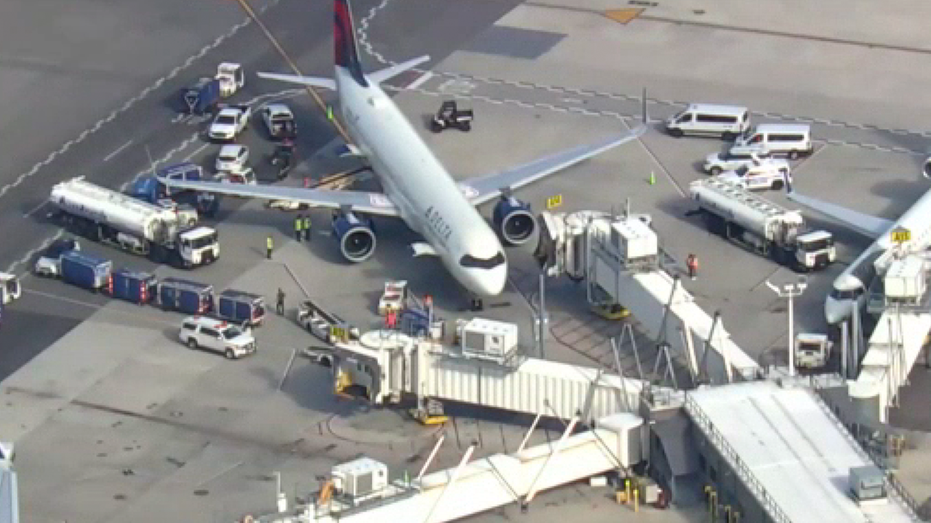
A routine commercial flight arriving in New York turned into a large-scale emergency mobilization Tuesday afternoon when the Delta Air Lines crew of Flight 1966 reported a potential landing gear concern while approaching John F. Kennedy International Airport. Within minutes, the New York City Fire Department (FDNY) had deployed more than 140 firefighters and EMS personnel to stand ready.
Ultimately, the situation turned out to be far less severe than initially feared. The Airbus A321neo landed safely, taxied to the gate under its own power, and no injuries were reported among the 170 passengers and six crew members on board.
Still, the rapid and extensive response serves as a reminder of the depth of America’s aviation safety protocols — and the readiness of first responders who protect travelers every single day.
What Prompted the Emergency Response
Delta Flight 1966 was en route from Luis Muñoz Marín International Airport in San Juan, Puerto Rico, to JFK. At approximately 4:45 p.m. local time, emergency officials were alerted to a report indicating the aircraft had two flat tires on its front landing gear while on approach.
Such a report, even if preliminary, triggers immediate safety procedures. Aircraft tire or landing gear concerns are treated with the utmost seriousness because they can impact steering, braking, and overall aircraft stability during touchdown.
According to FDNY officials, the call resulted in what the department categorizes as a “normal standby second alarm” — a significant deployment of resources. In total, 46 FDNY units and 141 fire and EMS personnel were dispatched to JFK in preparation for a potential runway incident.
This coordinated response ensures that if anything goes wrong during landing, emergency teams are already staged nearby. In aviation, preparation is everything.
The Aircraft: Airbus A321neo
The aircraft involved was an Airbus A321neo, one of the most widely used narrow-body jets in commercial aviation today. Known for fuel efficiency and range improvements over previous models, the A321neo is a workhorse for both domestic and Caribbean routes.
Commercial airliners are equipped with robust multi-wheel landing gear systems designed to handle substantial loads during takeoff and landing. The nose landing gear — the forward gear assembly — typically supports steering and balance rather than bearing the majority of the aircraft’s weight.
Even in cases of tire deflation or tread wear, modern aircraft are engineered with redundancies that allow for controlled landings under a range of circumstances. The system’s durability reflects decades of advancements guided by federal regulators and manufacturers.
Delta Clarifies the Situation
After the aircraft touched down safely and moved to the gate without incident, Delta representatives provided clarification. Contrary to the initial report of two flat front tires, the airline stated that only “some damage” to a single tire had occurred.
Importantly, Delta indicated the tire did not blow out. Instead, it experienced tread wear — a notably less severe condition than a catastrophic failure.
Following inspection by maintenance personnel, the aircraft was deemed safe to continue service. The issue did not require a tire replacement on the taxiway, and operations at JFK continued without broader disruption.
In short, what began as a potentially critical emergency turned out to be a precautionary event handled precisely as designed by America’s aviation safety framework.
Why Tire Reports Are Taken Seriously
Commercial aviation operates under stringent oversight from the Federal Aviation Administration (FAA). Any report involving landing gear — particularly tires — is treated as a priority because runway incidents can escalate quickly if not handled proactively.
Aircraft tires endure extreme forces. During landing, they can go from zero to over 150 miles per hour in seconds, absorbing tremendous heat and friction. Even under ideal conditions, the stress on these components is immense.
Potential risks associated with tire failures include:
- Loss of directional control during rollout
- Damage to hydraulic lines or brake systems
- Debris on the runway that could impact other aircraft
- Sparks or, in rare cases, fire from friction
For that reason, precautionary deployments are not overreactions — they are the standard of care in the world’s safest aviation system.
FDNY and Port Authority Preparedness
JFK Airport is operated by the Port Authority of New York and New Jersey, which works closely with the FDNY and airport emergency services to maintain constant runway readiness.
Airports of JFK’s size conduct regular multi-agency drills simulating everything from engine fires to disabled aircraft. These exercises are designed to ensure seamless communication among air traffic control, emergency responders, and airline operators.
When the call came in Tuesday afternoon, that training was put into action. Fire apparatus and EMS teams were staged in strategic positions, ready to respond instantly if the landing turned hazardous.
By 5:06 p.m., just over 20 minutes after the initial alert, officials declared the situation under control. The orderly resolution reflects disciplined coordination rather than luck.
No Injuries, No Panic
Crucially, none of the 170 passengers, two pilots, or four flight attendants were injured. There were no reports of smoke in the cabin, no emergency evacuations, and no runway closure stemming from the incident.
Passengers were allowed to disembark normally at the gate.
In an age where social media can amplify fear within seconds, the absence of chaos speaks volumes about how calmly and professionally the situation was handled.
Aviation Safety in the United States
The United States maintains one of the safest aviation systems in the world. Regulatory oversight from the FAA, independent investigations by the National Transportation Safety Board (NTSB), strict maintenance standards, and highly trained flight crews all contribute to a safety culture unmatched globally.
Every reported mechanical irregularity — no matter how minor — is documented and addressed. Airlines are required to adhere to approved maintenance schedules and inspection intervals, including rigorous checks of landing gear assemblies.
This layered approach to safety is why incidents like Tuesday’s often conclude without injury or structural damage. Redundancy is built into both equipment and procedure.
The Bigger Picture: Preparedness Over Reaction
Some observers might question why more than 140 personnel were deployed for an issue that ultimately amounted to tread wear. The answer is simple: preparedness saves lives.
Emergency management in aviation is built on the assumption that worst-case scenarios must be anticipated, not improvised. When a pilot reports possible tire damage, authorities do not gamble on optimism.
Instead, they prepare for the full spectrum of outcomes. If nothing happens, the cost is limited to time and staging resources. If something does go wrong, the rapid presence of fire and medical units can mean the difference between containment and catastrophe.
This disciplined approach reflects American values — responsibility, professionalism, and an unwavering commitment to public safety.
A Reminder of Infrastructure Strength
JFK is one of the busiest international gateways in the United States, serving tens of millions of passengers each year. Its ability to handle unexpected events without widespread disruption demonstrates the strength of American infrastructure.
Air traffic controllers, airline dispatchers, maintenance crews, firefighters, and EMS personnel each play a specialized role. When they operate in concert, the traveling public often never sees the complexity unfolding behind the scenes.
Tuesday’s response offered a glimpse into that synchronized system — not in crisis, but in precaution.
Trust in Systems That Work
Air travel remains one of the safest modes of transportation ever developed. Modern aircraft are engineered with redundancies, crews are extensively trained, and ground personnel rehearse contingencies repeatedly.
Incidents like the one involving Delta Flight 1966 are proof that the system works exactly as designed. A potential issue was reported. Authorities responded at scale. The aircraft landed safely. Passengers walked away unharmed.
That is not an accident. It is the product of methodical planning and investment in excellence.
Conclusion: Vigilance Is the Price of Safety
The swift mobilization of FDNY personnel at JFK may have ultimately been precautionary, but it represents something larger: the vigilance that keeps American skies safe.
When pilots speak, responders listen. When potential risks emerge, resources are deployed. And when safety systems are tested, they prove their worth.
Delta Flight 1966 reached the gate without injury or escalation, thanks to a layered safety culture developed over generations. For travelers passing through New York and airports across this great nation, that should inspire confidence.
In a world filled with uncertainty, it is reassuring to know that American aviation — backed by professionals on the ground and in the cockpit — continues to set the global standard for safety and preparedness.
Wake Up America News — Your Source for Patriotic News.