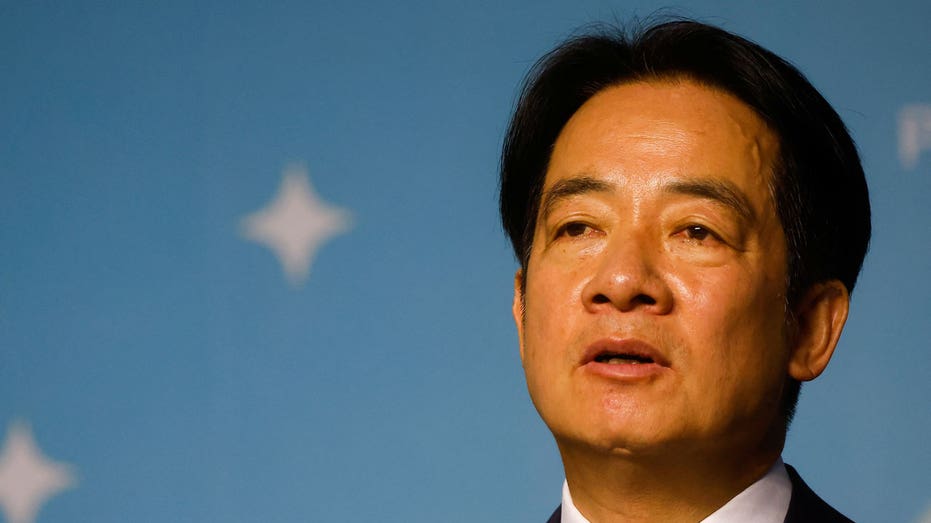
Taiwan’s President Issues Unwavering Warning: “We Will Never Be Sacrificed”
In a moment that could shape the future of the Indo-Pacific, Taiwanese President Lai Ching‑te delivered a forceful and uncompromising message to both Beijing and the world: Taiwan will never surrender its sovereignty, its democracy, or its right to exist as a self-governing nation.
Writing in a public statement Sunday, Lai declared that Taiwan “will not, under pressure, give up national sovereignty and dignity, or its democratic and free way of life.” He further emphasized that the island nation will “never be sacrificed or traded.”
The timing of his remarks was no accident. They came on the heels of a high-stakes meeting in Beijing between President Donald J. Trump and Chinese Communist Party leader Xi Jinping. That summit, closely watched across Asia and here at home, stirred concern in Taiwan about its future security and America’s long-term commitments in the region.
A Direct Response to Beijing—and a Signal to Washington
Lai’s comments were his first public reaction to the Trump-Xi summit. While President Trump did not announce new weapons sales during the meeting, he reaffirmed that the United States is not looking to encourage a unilateral declaration of independence by Taiwan simply because Washington offers support.
That nuanced position reflects the complex framework underlying U.S.–Taiwan relations, which operate under the Taiwan Relations Act of 1979. Passed by Congress after the United States formally recognized the People’s Republic of China, the law requires the U.S. to provide Taiwan with defensive arms and maintain the capacity to resist any force that would jeopardize the island’s security.
Lai was careful to emphasize that American security cooperation with Taiwan is not just a bilateral agreement—it is a strategic pillar that has helped prevent war in the Taiwan Strait for decades.
“This is not only a U.S. security commitment to Taiwan, but also the most important deterrent force over the years against actions that undermine regional peace and stability,” Lai stated.
In other words, Taiwan views American support not as an invitation to recklessness, but as a stabilizing force designed to deter aggression from Beijing.
The Taiwan Relations Act: America’s Legal Backbone in the Pacific
For many Americans, the Taiwan issue feels distant. But U.S. policy in the region is rooted firmly in law and decades of bipartisan consensus.
The Taiwan Relations Act (TRA) requires:
- The sale of defensive arms to Taiwan
- The maintenance of U.S. capacity to resist coercion or aggression
- Continued commercial, cultural, and other unofficial relations
While the TRA stops short of a formal defense treaty, it creates a significant strategic obligation. It sends a powerful message that the United States will not allow a free and democratic society of more than 23 million people to be swallowed by communist intimidation.
Under President Trump’s leadership, arms sales to Taiwan increased significantly. In December, his administration approved what was described as the largest arms package ever—valued at approximately $11 billion. According to public reporting, an additional $14 billion package remains under consideration.
These sales include advanced defensive systems designed to counter China’s growing missile forces, naval expansion, and increasing military drills around the island.
China’s Escalating Pressure Campaign
Lai’s sharp language—calling China “the root cause of regional instability” and “the destruction of regional peace”—did not emerge in a vacuum.
In recent years, the People’s Republic of China has dramatically increased military activity near Taiwan. Fighter jets routinely cross the median line of the Taiwan Strait. Naval flotillas conduct live-fire exercises. The Chinese Communist Party has repeatedly stated that unification is inevitable—and has refused to rule out the use of force.
The island’s Ministry of National Defense, through its publicly accessible reporting at the Republic of China Ministry of National Defense, regularly tracks Chinese aircraft and naval vessels operating nearby. These activities are not symbolic—they are deliberate pressure tactics meant to wear down Taiwan’s defenses and morale.
Beijing’s broader ambitions in the South China Sea, combined with its global military modernization campaign, have alarmed U.S. policymakers across party lines. The Indo-Pacific has become the central theater of 21st-century geopolitics.
America’s Strategic Stakes in the Taiwan Strait
Why does Taiwan matter so much to the United States?
First, Taiwan is a thriving democracy in a region increasingly dominated by authoritarian regimes. It holds free elections, maintains an independent judiciary, and supports a vibrant civil society. The preservation of such a democracy aligns directly with America’s long-standing principles.
Second, Taiwan sits at a strategically crucial location in the first island chain—an arc of territory stretching from Japan through the Philippines. Control of Taiwan would fundamentally alter the regional balance of power.
Third, Taiwan’s economic significance is enormous. The island is home to Taiwan Semiconductor Manufacturing Company (TSMC), the world’s leading advanced semiconductor manufacturer. Chips produced in Taiwan power American smartphones, automobiles, medical devices, and military systems. Any disruption to Taiwan would reverberate through the global supply chain—including right here in the United States.
That is why Washington’s Indo-Pacific strategy, outlined through the U.S. Department of Defense Indo-Pacific initiatives, places such emphasis on freedom of navigation, deterrence, and alliance-building.
Lai’s Five-Point Message: Strength Without Provocation
Lai’s public statement may have been defiant, but it was also calibrated. He rejected both submission and escalation.
He emphasized several core principles:
- Taiwan will not renounce its sovereignty.
- Taiwan will not abandon democracy under pressure.
- Taiwan appreciates continued U.S. support for stability.
- Peace in the Taiwan Strait serves global interests.
- Taiwan will strengthen its own defenses.
Importantly, Lai did not declare formal independence. Instead, he reiterated a commitment to maintaining the current status quo—responsibly and without provocation.
That balancing act reflects political reality. Taiwan seeks to preserve its freedom without triggering armed conflict. At the same time, it refuses to bow to Beijing’s demands.
“Peace depends on strength, on the will of our people to defend freedom and democracy, and on firm cooperation with friends and allies,” Lai wrote.
Those words echo a philosophy deeply familiar to American conservatives: peace through strength. It was President Ronald Reagan who famously argued that deterrence—not appeasement—keeps the peace.
President Trump’s Calculated Position
President Trump’s comments following the Xi meeting reflected strategic caution. He did not announce a blank check for Taiwan, nor did he promise automatic military intervention.
Instead, he signaled that the United States supports stability and opposes unilateral moves that would destabilize the region.
This measured ambiguity has long been a tool of U.S. policy. It is designed to discourage two potential miscalculations:
- Beijing believing it could invade without consequence
- Taipei believing it has unlimited backing for risky political moves
By maintaining strategic uncertainty, Washington retains flexibility while reinforcing deterrence.
No Immediate Response from Beijing
As of this writing, there has been no official public response from Beijing to Lai’s latest remarks. Nor has there been an immediate statement from the White House specifically addressing his comments.
However, given China’s consistent rhetorical position—asserting Taiwan as part of its territory—it is likely that tensions will remain elevated.
The broader question is whether deterrence will continue to hold or whether miscalculation could lead to open conflict.
The Bigger Picture: A Test of the Free World
The situation surrounding Taiwan is more than a regional dispute. It is a test case for whether free societies can stand firm against authoritarian expansion.
If Taiwan were abandoned or “traded” away for temporary diplomatic gains, it would send shockwaves through U.S. alliances worldwide. Nations like Japan, South Korea, and the Philippines would be forced to question whether American commitments are durable.
Conversely, maintaining a steady, credible deterrent reinforces stability across the Indo-Pacific.
This is why bipartisan majorities in Congress continue to support Taiwan through legislation, arms approvals, and diplomatic engagement.
Taiwan’s Own Responsibility
Lai also made clear that Taiwan understands the burden of self-defense ultimately rests on its own shoulders.
In recent years, Taiwan has expanded mandatory military service, invested in asymmetric warfare capabilities, and increased defense spending. The island is emphasizing mobile missile systems, naval mines, drones, and resilient command structures—tools designed to complicate any potential invasion plan.
By investing in its own strength, Taiwan reinforces the credibility of any American support.
At its core, President Lai’s message was about dignity and sovereignty. It was a statement that Taiwan’s future will not be decided behind closed doors in Beijing—or anywhere else.
For Americans, the moment is a reminder that global leadership carries responsibility. The United States has long stood as a defender of free nations against coercive regimes.
President Trump’s administration faces difficult strategic calculations. But one truth remains clear: stability in the Taiwan Strait is essential not only to Asia, but to U.S. economic and national security.
Taiwan has made its position unmistakable. It will not surrender its freedom. It will not abandon democracy. And it will not allow itself to be sacrificed in geopolitical negotiations.
The coming months will determine whether deterrence holds—or whether authoritarian ambition tests the resolve of the free world. One thing is certain: Taiwan is signaling that it intends to stand firm.
And the United States, guided by law, principle, and strategic interest, must decide how best to ensure that peace endures through strength.