Pentagon Adjusts U.S. Force Posture in Europe as Trump Demands Fairer NATO Burden-Sharing
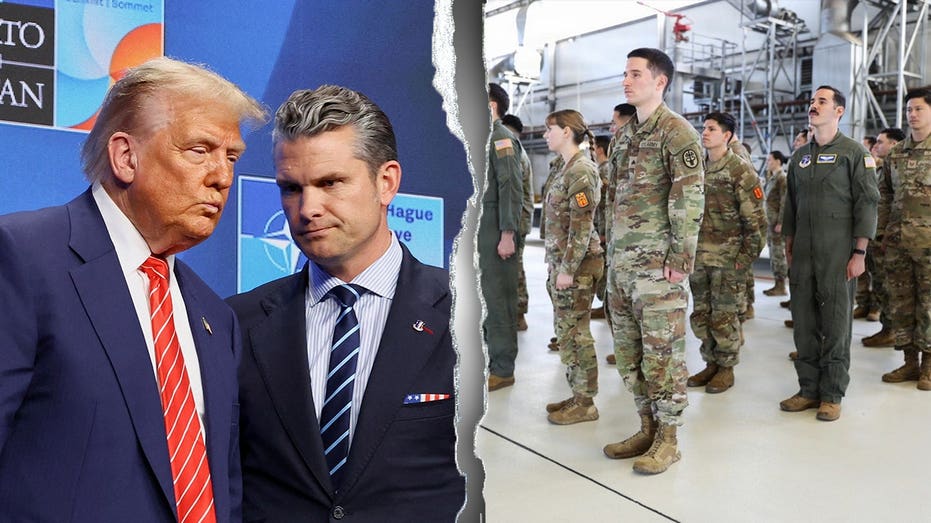
The U.S. Department of Defense has announced it will reduce the number of American Brigade Combat Teams (BCTs) stationed in Europe from four to three, marking a significant shift in America’s military footprint on the continent. The move aligns with President Donald J. Trump’s longstanding insistence that European allies under the North Atlantic Treaty Organization (NATO) must shoulder a greater share of their own defense burden.
According to the U.S. Department of Defense, the decision follows a comprehensive review of America’s force posture in Europe. While Pentagon officials have not specified the exact number of troops affected, a typical Brigade Combat Team includes approximately 4,400 to 4,700 soldiers. The reduction will effectively return U.S. troop levels in Europe to numbers not seen since 2021.
This recalibration comes amid broader strategic discussions about America’s global commitments, defense spending priorities, and the necessity for NATO countries—many of which are wealthy, developed nations—to invest more seriously in their own security.
What Is a Brigade Combat Team and Why It Matters
A Brigade Combat Team is one of the U.S. Army’s primary deployable combat formations. According to the U.S. Army, BCTs are self-sufficient units designed to conduct a wide range of missions, from conventional warfare to deterrence operations and peacekeeping.
Each BCT typically includes:
- Infantry or armored maneuver battalions
- Field artillery units
- Engineer companies
- Intelligence and reconnaissance elements
- Logistics and medical support units
In Europe, BCTs have played a central role in deterrence operations, especially along NATO’s eastern flank. Since Russia’s 2014 annexation of Crimea and its subsequent invasion of Ukraine in 2022, U.S. forces in Europe have been viewed as a key stabilizing presence.
However, maintaining these units overseas comes at a considerable financial and logistical cost. Rotational deployments—where units serve overseas for nine-month tours—require constant transport of personnel and equipment. Washington has increasingly questioned whether American taxpayers should continue subsidizing the defense of nations capable of doing more for themselves.
The Halted Poland Rotation and Eastern Flank Concerns
The decision to cut one BCT follows another significant move: the Pentagon’s recent halt of a planned rotation of roughly 4,000 U.S. troops to Poland. That deployment would have involved the 2nd Armored Brigade Combat Team, 1st Cavalry Division.
Poland, a frontline NATO member bordering both Ukraine and Russia’s Kaliningrad enclave, has become a major hub for U.S. forces in Europe. According to information released by the Department of Defense, roughly 10,000 U.S. troops are typically stationed in Poland, most on rotational assignments.
Because the American presence there relies heavily on these scheduled rotations, the delay has sparked concern among officials in Warsaw. Polish leaders have consistently described their country as a “model ally,” emphasizing both their political alignment with Washington and their increased defense spending.
Poland’s Deputy Defense Minister Paweł Zalewski has indicated that Warsaw will seek clarification from U.S. officials regarding the changes. Meanwhile, Polish Deputy Prime Minister Władysław Kosiniak-Kamysz has spoken with U.S. War Secretary Pete Hegseth about the evolving situation.
Poland’s Defense Build-Up: A Model for NATO?
Unlike many Western European nations, Poland has significantly accelerated its military investments in recent years. According to official data from Poland’s Ministry of National Defence, the country has boosted defense spending well beyond NATO’s minimum 2% of GDP requirement.
This increased investment has included:
- Large-scale purchases of U.S.-made Abrams tanks
- Acquisition of Patriot air defense systems
- Modernization of artillery and missile systems
- Expansion of active-duty troop strength
Polish leaders have also openly discussed additional measures, including expanded training requirements for citizens and hosting advanced U.S. weapons systems. Poland’s proactive approach contrasts sharply with other NATO members that have struggled for years to meet even the alliance’s basic spending benchmarks.
The Pentagon has acknowledged Poland’s efforts, stating that the country has shown “both the ability and resolve to defend itself.” In blunt terms, U.S. officials have suggested that other NATO allies should follow Poland’s example.
Trump’s ‘America First’ Approach to NATO
President Trump has consistently argued that the United States carries a disproportionate share of NATO’s defense costs. The alliance, founded in 1949 as a collective security arrangement against Soviet expansion, is based on Article 5 of the North Atlantic Treaty, which commits members to mutual defense.
While Article 5 represents a solemn commitment, Trump has questioned whether all members are equally serious about honoring it. During his first term, the president repeatedly pressured allies to meet NATO’s 2% defense spending target—a benchmark agreed upon at the 2014 Wales Summit.
At that time, only a handful of NATO nations were meeting the target. Though more countries have since increased spending, disparities remain significant. The United States continues to account for a substantial portion of NATO’s overall military expenditures.
Trump’s argument is straightforward: wealthy European countries should not rely indefinitely on U.S. taxpayers for their defense, particularly when American resources are needed to counter threats in other regions such as the Indo-Pacific.
Strategic Rebalancing in a Changing Global Landscape
The reduction of one Brigade Combat Team does not signal a wholesale U.S. withdrawal from Europe. Instead, it appears to be part of a broader reassessment of how American forces are allocated worldwide.
U.S. military planners face several simultaneous challenges:
- Deterring China in the Indo-Pacific
- Countering Russian aggression in Europe
- Maintaining readiness in the Middle East
- Modernizing America’s nuclear and conventional forces
Maintaining permanent or rotational forces overseas ties up resources, equipment, and personnel that could be repositioned or modernized elsewhere. The Pentagon has indicated that further analysis will determine the “final disposition” of U.S. forces in Europe, suggesting that adjustments may continue.
By recalibrating troop levels now, the administration is signaling that Europe’s defense can no longer default to automatic American expansion without reciprocal commitments.
Congressional Tensions and Political Pushback
Any reduction in U.S. forces overseas can spark debate in Congress. Lawmakers from both parties have at times expressed concern that reductions might embolden adversaries, particularly Russia.
Some members of Congress have explored mechanisms to limit executive authority over troop withdrawals from NATO-aligned countries. However, the Constitution grants the president broad powers as commander-in-chief, creating ongoing legal and political debate over how far congressional oversight can extend.
For supporters of the administration’s approach, the issue is not about abandoning allies but restoring balance. They argue that strong alliances depend on mutual accountability—not automatic, open-ended commitments.
What This Means for NATO’s Future
The long-term significance of this troop adjustment may extend far beyond one Brigade Combat Team. The decision reinforces a fundamental shift in Washington’s expectations: NATO must evolve from a U.S.-dominated shield to a more evenly funded and operationally capable partnership.
If European countries respond by accelerating their own investments—expanding their armed forces, modernizing equipment, and increasing readiness—then America’s recalibration could strengthen the alliance rather than weaken it.
Poland offers one possible blueprint. By boosting spending, aggressively modernizing, and maintaining close coordination with U.S. leadership, Warsaw has positioned itself as a serious security partner.
Other nations, particularly some Western European powers with far larger economies, may now face renewed pressure to demonstrate similar resolve.
A Return to 2021 Levels, Not a Retreat
It is important to note that the new posture returns troop numbers to levels seen just a few years ago. This is not a dramatic rollback to pre-Ukraine invasion figures, nor does it eliminate the substantial U.S. infrastructure already in place across Europe.
The United States continues to maintain key bases in Germany, Italy, the United Kingdom, and Poland. Equipment prepositioning sites, air defense systems, intelligence-sharing networks, and joint exercises with NATO forces remain intact.
In short, America is not walking away. Instead, it is demanding that capable allies carry more of the load.
The Bigger Picture: Accountability in Alliances
For decades, the United States has served as the primary guarantor of European security. That role was essential during the Cold War and played a stabilizing function afterward. But the geopolitical environment of 2026 is not the same as it was in 1949.
As Washington navigates rising challenges from rival powers, infinite commitments are no longer sustainable without shared sacrifice. The Pentagon’s adjustment of Brigade Combat Teams underscores a simple but powerful message: America will remain engaged, but partnership must mean partnership.
The coming months will reveal whether NATO members respond by strengthening their own capabilities—or whether tensions over burden-sharing continue. What is clear is that the administration is determined to make “America First” more than a slogan. It is shaping real policy decisions with immediate strategic consequences.
For American taxpayers, military families, and allies overseas, the debate over Europe’s defense is entering a new chapter—one rooted in accountability, strength, and a renewed expectation that free nations defend themselves alongside the United States, not behind it.