DHS Slams Massachusetts Sanctuary Policies After Illegal Immigrant Charged in Violent Bat Attack Is Released
The U.S. Department of Homeland Security (DHS) is sharply criticizing so-called “sanctuary” policies in Massachusetts after an illegal immigrant accused of a violent assault was released from local custody without notification to federal immigration authorities.
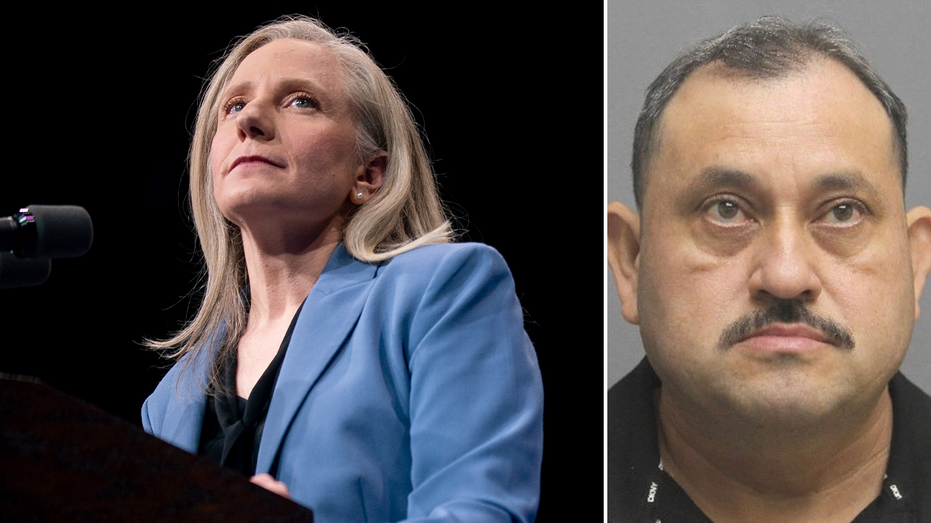
According to federal officials, Dhaval Amratbhai Patel, an Indian national unlawfully present in the United States, was arrested by the Worcester Police Department on May 16 and charged with assault and battery with a dangerous weapon. The alleged weapon: a baseball bat.
Immigration and Customs Enforcement (ICE), operating under the authority of DHS, took Patel into custody two days later, on May 18, after local authorities released him without honoring or coordinating with federal immigration enforcement efforts.
The episode is now fueling renewed debate over sanctuary policies in Massachusetts — and raising serious questions about public safety, federal-state cooperation, and the rule of law.
The Alleged Assault: What We Know
Based on information provided by DHS, the incident unfolded at a liquor store where Patel was employed. Authorities say he became involved in a heated argument with a customer.
According to reporting on the arrest, the verbal dispute escalated into violence. Patel allegedly grabbed a baseball bat and struck the other man, resulting in charges of assault and battery with a dangerous weapon — a serious felony offense under Massachusetts law.
Massachusetts defines assault and battery with a dangerous weapon as an aggravated crime that includes inflicting harm using an object capable of causing serious injury. A baseball bat, when wielded in anger, clearly meets that standard.
While details of the victim’s injuries have not been publicly released, the charge itself underscores the gravity of the alleged act.
Release Without ICE Notification
After Patel’s arrest on May 16, local authorities allegedly released him without notifying ICE or honoring a detainer request, according to DHS officials.
Two days later, federal agents located and arrested him.
That gap in time — between release and federal apprehension — is exactly what critics of sanctuary policies warn about.
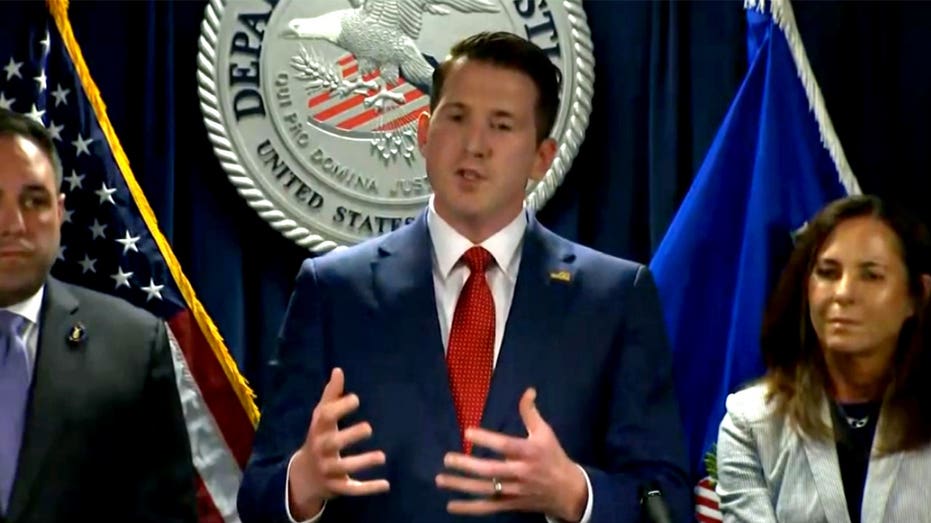
DHS Acting Assistant Secretary for Public Affairs Lauren Bis issued a pointed statement condemning the decision.
“This illegal alien from India thought he could go around beating people with a baseball bat. Sanctuary politicians released him from jail after his arrest for assault and battery with a dangerous weapon,” Bis said. “Sanctuary politicians must stop choosing to release criminals into our communities and work with DHS to get criminals out of the country.”
The Department argues that cooperation between local law enforcement and federal immigration officials is essential when dealing with defendants accused of violent crimes.
Understanding ICE Detainers
At the center of the controversy is the issue of ICE detainers.
An ICE detainer is a request from U.S. Immigration and Customs Enforcement asking a local law enforcement agency to notify federal authorities before releasing an individual suspected of being unlawfully present in the United States. The detainer also asks that the agency temporarily hold the individual for up to 48 hours (excluding weekends and holidays) so ICE can assume custody.
Detainers are a long-standing tool authorized under federal immigration law, including provisions of the Immigration and Nationality Act (INA).
However, courts in some states have limited the circumstances in which local jurisdictions may comply with detainers, leading to a patchwork of policies across the country.
Massachusetts, while not officially labeling itself a “sanctuary state,” has several jurisdictions that restrict cooperation with federal immigration enforcement.
Massachusetts and Sanctuary Policies
The debate over so-called sanctuary policies in Massachusetts has been ongoing for years.
While the Commonwealth’s official website, Mass.gov, does not designate the state as a sanctuary jurisdiction, court rulings — including decisions from the Massachusetts Supreme Judicial Court — have limited the ability of state and local officers to hold individuals solely on the basis of federal immigration detainers.
This legal framework has effectively created barriers to full cooperation with ICE.
Critics argue that such policies prioritize political ideology over public safety. Supporters claim they protect constitutional rights and build trust between immigrant communities and local police.
But cases involving individuals accused of violent crimes often reignite public concern.
The Bigger Public Safety Concern
At its core, this case is not just about immigration status. It is about whether individuals accused of violent actions should be swiftly transferred to federal authorities when they are unlawfully present in the country.
For many Americans, the concern is straightforward:
- If someone is accused of beating another person with a baseball bat, why risk releasing him into the community?
- If that individual is unlawfully in the United States, why not allow federal agents to assume custody immediately?
- Does releasing such defendants erode public confidence in the justice system?
DHS’s statement reflects the federal government’s position that cooperation saves resources and enhances safety.
Federal officials argue that when jurisdictions decline to cooperate:
- ICE agents must conduct at-large arrests, which can be more dangerous for officers and the public.
- Individuals have an opportunity to disappear into communities.
- Victims and witnesses may feel justice was not fully pursued.
In this instance, ICE did manage to apprehend Patel within 48 hours. But DHS maintains that the outcome could have been different.
Where and When Did He Enter the U.S.?
Authorities have not publicly disclosed where or when Patel entered the United States unlawfully.
That unanswered question highlights another persistent issue: tracking visa overstays and border entries.
According to DHS data in recent years, a significant portion of individuals unlawfully present in the country entered legally on temporary visas but failed to depart when required. Others cross the border illegally without inspection.
Without precise entry records, it remains unclear which category Patel falls into.
Federal-State Tension Over Immigration Enforcement
Immigration enforcement authority rests with the federal government under the U.S. Constitution. Agencies such as DHS and ICE are tasked with enforcing immigration laws nationwide.
However, state and local governments control their own policing operations.
This dual structure has led to tension — especially in politically divided states.
The concept of “sanctuary cities” emerged prominently during the 1980s and expanded in the 2000s. You can read more about the broader history of sanctuary policies at Britannica’s overview of sanctuary cities.
At issue is the principle of “anti-commandeering,” under which the federal government cannot force states to enforce federal law. As a result:
- Local agencies may choose not to voluntarily assist ICE.
- Federal authorities must operate independently within those jurisdictions.
- Political battles often play out in the courts and state legislatures.
For many Americans, this legal complexity translates into a more basic concern: Are violent offenders slipping through cracks created by political disputes?
Community Reactions and Unanswered Questions
The City of Worcester has not publicly detailed its reasoning regarding Patel’s release. Neither the Worcester Police Department nor the Worcester County District Attorney’s Office immediately provided public comment on the matter at the time of reporting.
That silence leaves open several questions:
- Was an ICE detainer formally lodged?
- Did state court rulings prevent local officials from holding Patel longer?
- Was bail set, and if so, how was it determined?
These procedural details matter. They determine whether the release was purely discretionary or constrained by existing Massachusetts legal precedent.
A Renewed Call for Policy Reform?
Incidents like this often trigger renewed calls in Washington for immigration enforcement reform.
Advocates for stronger enforcement argue:
- Federal detainers involving violent felony charges should carry mandatory compliance.
- Jurisdictions that refuse cooperation should face funding consequences.
- Congress should clarify statutory authority to eliminate legal ambiguity.
Opponents counter that expanding federal authority could infringe on constitutional safeguards and local autonomy.
Regardless of where lawmakers land, the debate remains active — and deeply consequential.
The Broader Pattern
This is not the first time ICE has re-arrested an individual following release by a Massachusetts jurisdiction.
Federal officials have repeatedly stated that sanctuary-style policies result in federal agents conducting more targeted community arrests rather than controlled transfers inside secure jail facilities.
ICE maintains that in-custody transfers are safer and more orderly. Critics argue that compliance may expose municipalities to legal risk under state interpretations.
For ordinary residents, what matters is safety and accountability — not bureaucratic technicalities.
Public Safety vs. Political Ideology
Ultimately, this case highlights a central tension in America’s immigration debate.
On one hand, many local leaders claim limited cooperation policies encourage immigrant communities to report crimes without fear.
On the other, federal officials insist that shielding individuals accused of violent offenses sends the wrong message and undermines the rule of law.
When an individual accused of wielding a baseball bat in an alleged assault is released without federal notification, critics say it erodes trust in the system — particularly among victims of crime.
At minimum, cases involving serious charges prompt calls for a more targeted approach: cooperation in violent felony cases, even if broader nonviolent cases remain subject to local discretion.
The Road Ahead
Patel is now in ICE custody, where he will likely face removal proceedings under federal immigration law.
An immigration judge will ultimately determine whether he is deportable and whether any relief from removal applies.
Meanwhile, the underlying assault case remains a matter for Massachusetts courts.
The outcome of both proceedings will shape what happens next — for Patel and for the ongoing policy fight.
What is certain is this: the clash between sanctuary policies and federal enforcement is far from resolved.
As communities across America grapple with crime, border security, and immigration enforcement, incidents like this serve as flashpoints. They force policymakers to confront a fundamental question — should political boundaries ever interfere with protecting citizens from individuals accused of violent wrongdoing?
For many Americans, the answer is simple. Public safety must come first. And cooperation among all levels of government is not optional — it is essential.
Wake Up America News will continue monitoring developments from DHS, ICE, and Massachusetts officials as this case proceeds.