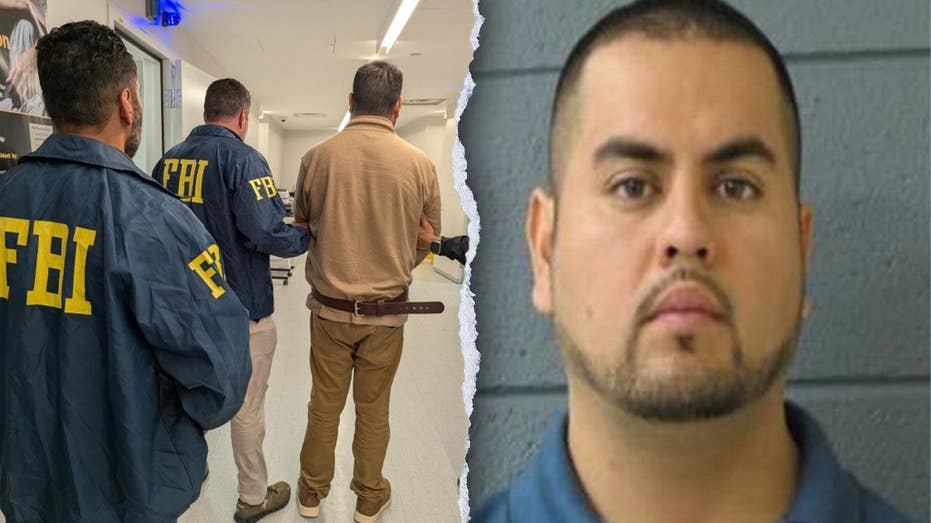
FBI’s Long Hunt Ends as Accused Wedding Night Killer Is Returned to American Soil
After more than a decade on the run, a man accused of murdering his bride on their wedding night in Illinois has finally been brought back to the United States to face justice. Federal authorities confirmed that Arnoldo Jimenez, long a fugitive and once ranked among the nation’s most wanted criminals, has been returned from Mexico following years of coordinated international pursuit.
The Federal Bureau of Investigation announced that Jimenez was transported to the United States more than a year after his January 30, 2025, arrest in Monterrey, Mexico. His return marks what officials describe as a major milestone in one of the Chicago field office’s most enduring manhunts.
For the family of Estrella Carrera and for Americans who believe in law and order, this long-awaited extradition sends a clear message: no matter how far someone runs, justice has a long memory.
A Brutal Crime on a Night of Celebration
According to investigators, the case stems from events in May 2012 in Burbank, Illinois, a southwest suburb of Chicago governed by the City of Burbank. On May 11 of that year, Arnoldo Jimenez and 26-year-old Estrella Carrera were married in what should have been the beginning of a new life together.
Less than 48 hours later, Carrera was found dead in the bathtub of her apartment on May 13, 2012. Authorities allege that she was fatally stabbed on her wedding night. The shocking nature of the crime—a newlywed allegedly slain within hours of saying “I do”—stunned the local community and drew national attention.
Court records indicate that Jimenez was charged with first-degree murder shortly thereafter. A state warrant was issued on May 15, 2012, by prosecutors in Cook County, which operates under the jurisdiction of the Clerk of the Circuit Court of Cook County. Just two days later, federal authorities filed additional charges, including unlawful flight to avoid prosecution.
From Local Suspect to Federal Fugitive
When a suspect crosses state lines or international borders to evade arrest, the case can quickly shift from a local criminal investigation into a federal manhunt. That is precisely what happened here. As Jimenez fled the United States, federal authorities issued a warrant charging him with unlawful flight to avoid prosecution under federal law.
The U.S. Department of Justice and the FBI became deeply involved in the effort to locate and apprehend him. Over time, Jimenez was added to the FBI’s prestigious and highly publicized Ten Most Wanted Fugitives list—a designation reserved for individuals considered especially dangerous or difficult to capture.
At the time of his arrest, Jimenez was reportedly ranked as the fourth-most wanted fugitive in the United States. Placement on the Top Ten list significantly raises public awareness, mobilizes tips from citizens, and often increases international law enforcement cooperation.
The murder charge against him remains first-degree murder, one of the most serious criminal offenses under Illinois law. Such a charge requires prosecutors to prove intent and carries severe penalties, including life imprisonment.
Captured in Mexico After Years on the Run
Jimenez managed to avoid capture for more than a decade. Authorities allege that he fled to Mexico, where he remained for years under the radar of American law enforcement.
On January 30, 2025, Mexican authorities arrested Jimenez in Monterrey, a major industrial city in northeastern Mexico. The arrest was carried out by Mexican law enforcement working in coordination with U.S. agencies, reflecting the complex and often delicate process of cross-border criminal investigations.
The FBI praised the international cooperation involved in the arrest and extradition process. In a public statement, the agency emphasized that time does not erode its commitment to bringing fugitives to justice.
“No matter how much time has passed or where a criminal may be in the world, the FBI will never stop in our pursuit of justice,” the bureau said in a post following his return to the U.S.
The extradition process between the United States and Mexico is governed by treaty and involves review by both legal systems. Once apprehended abroad, fugitives often challenge extradition in local courts, which can delay their return for months or even years. The fact that Jimenez was successfully returned speaks to sustained diplomatic and legal coordination.
Why the FBI’s Most Wanted List Matters
The FBI’s Ten Most Wanted Fugitives list, established in 1950, has been instrumental in capturing some of the nation’s most dangerous criminals. According to the official FBI page, hundreds of fugitives have been apprehended since the list’s inception, many due to tips from ordinary citizens.
Individuals placed on the list are typically considered:
- Dangerous and capable of harming others
- Likely to flee or remain hidden for extended periods
- Of significant public interest due to the severity of their alleged crimes
The Jimenez case demonstrates the power of sustained attention. Even after more than a decade, the FBI Chicago Field Office continued to pursue leads and maintain coordination with foreign authorities.
Cases like this serve as a reminder that public vigilance matters. Citizens, both at home and abroad, have historically played a role in providing tips that lead to arrests of Top Ten fugitives.
A Community Still Seeking Closure
The killing of Estrella Carrera left deep scars in her community. Burbank residents were forced to confront an unthinkable act of violence occurring within what appeared to be a newly formed household.
When a crime shatters a moment meant for joy—such as a wedding—it resonates far beyond the immediate victim. Family members lose a daughter and sibling. Friends lose someone whose future they celebrated just days earlier. The sense of betrayal and horror becomes magnified.
For more than 13 years, Carrera’s loved ones waited for the suspect to be apprehended and returned. During that time, the possibility that he might never face trial remained a painful uncertainty.
The return of Jimenez to Illinois does not undo the tragedy of May 2012. But it does reopen the path toward accountability through the American justice system.
What Happens Next in the Legal Process
Authorities have not yet disclosed a specific motive for the alleged killing, nor have they provided detailed information about Jimenez’s first court appearance. However, now that he has been returned to U.S. custody, standard criminal proceedings will move forward.
Typically, the next steps in a case like this include:
- An initial court appearance or arraignment in Cook County
- Formal presentation of charges
- Pretrial hearings addressing evidence, bail, and procedural matters
- Potential trial proceedings if no plea agreement is reached
If convicted of first-degree murder under Illinois law, the penalties can include life imprisonment. Prosecutors will have the burden of presenting evidence that meets the high standard required for conviction in a homicide case.
In high-profile cases involving extradition, courts also ensure that due process rights are fully observed. The United States legal system, rooted in constitutional protections, guarantees the accused the right to counsel, a fair trial, and the presumption of innocence until proven guilty.
The Importance of Border Enforcement and International Cooperation
The case also underscores broader questions about border enforcement and the challenges posed when suspects flee across international boundaries.
The United States and Mexico maintain formal extradition agreements, but bringing fugitives back often requires:
- Extensive documentation from U.S. prosecutors
- Judicial review within the foreign country
- Diplomatic coordination between governments
- Patience as legal appeals are exhausted
Law enforcement agencies such as the U.S. Marshals Service frequently assist in the apprehension and transport of fugitives, though the FBI led the public effort in this case.
The return of Jimenez highlights both the strengths and the challenges of international law enforcement partnerships. When agencies collaborate and sustain long-term efforts, even fugitives who evade capture for years can ultimately be located and detained.
A Message About Accountability
For a nation built on the rule of law, cases like this reinforce a simple but powerful principle: accountability does not expire. Time, distance, and foreign borders may delay justice, but they do not erase it.
The FBI’s statement accompanying Jimenez’s return was clear in tone and purpose. The bureau emphasized perseverance, signaling that the agency’s mission does not fade as headlines change or years pass.
Americans expect their law enforcement institutions to remain steadfast. This case demonstrates that federal and local authorities are willing to invest years of effort to ensure that suspects in serious crimes answer for their alleged actions.
Justice Delayed, Not Denied
The facts at the heart of this case remain deeply disturbing: a 26-year-old woman found dead in her bathtub less than two days after her wedding. A husband who vanished and allegedly fled the country. A community and family forced to wait over a decade for progress.
Now, with Arnoldo Jimenez back on U.S. soil, the American justice system will have the opportunity to fully examine the evidence in a court of law.
Regardless of the eventual outcome in court, one thing is certain: the persistence of investigators and international cooperation ensured that this case did not simply fade into obscurity. For those who believe in law, order, and personal accountability, that persistence matters.
As the legal process unfolds in Illinois, many will be watching—not only for a verdict, but for the affirmation of a principle central to this country’s foundation: that no one is beyond the reach of justice.