New Bodycam Footage Reveals Tension Inside Police Station After Deadly Ohio Crash
Newly released police body camera footage is once again bringing national attention to one of Ohio’s most shocking recent murder cases. The video captures the father of convicted killer Mackenzie Shirilla confronting officers and attempting to prevent them from questioning his daughter after her arrest in a 2022 crash that claimed the lives of two young men.
The footage shows raw emotions inside the Strongsville Police Department in Strongsville, Ohio. Mackenzie Shirilla’s father, Steven Shirilla, can be heard calling his daughter “a dumb 18-year-old” while insisting that officers were not permitted to question her without legal representation.
This dramatic exchange comes as the case has re-entered public discussion following the release of Netflix’s true-crime documentary The Crash, which examines the investigation, courtroom battle, and aftermath of the controversial trial.
A Tragic Crash That Shook Northeast Ohio
The case centers on a devastating early morning crash that occurred on July 31, 2022, in Strongsville, Ohio, a suburban community southwest of Cleveland. At approximately 6:15 a.m., officers responded to a crash at the PLIDCO commercial building located at 11792 Alameda Drive.
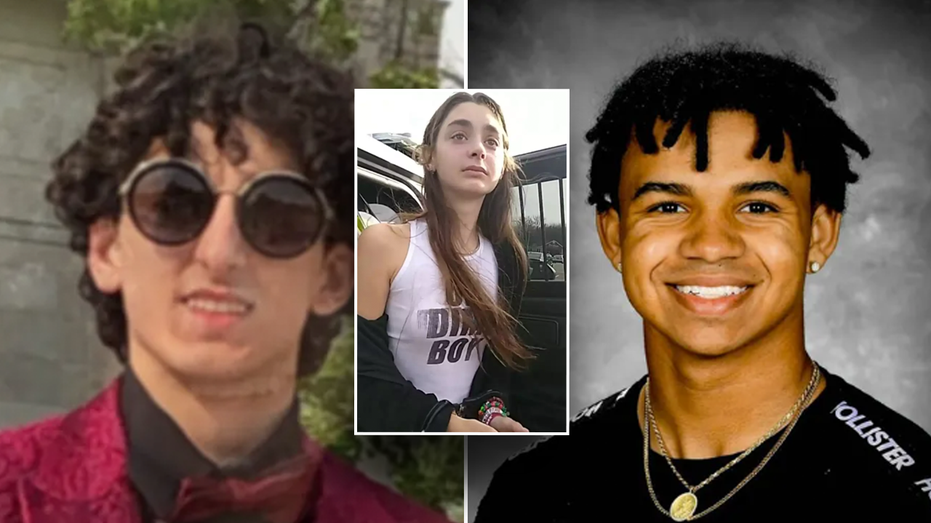
Behind the wheel of a Toyota Camry was 17-year-old Mackenzie Shirilla. Inside the vehicle were her boyfriend, 20-year-old Dominic Russo, and their friend, 19-year-old Davion Flanagan.
According to investigators, the Camry slammed into a brick building at a high rate of speed. The impact was catastrophic. Emergency crews were forced to mechanically extricate Russo and Flanagan from the wreckage. Both young men were pronounced dead at the scene.
Shirilla survived and was transported to MetroHealth Medical Center for treatment.
What initially appeared to be a tragic traffic accident soon evolved into something far more serious.
From Accident to Homicide Investigation
Early assessments reportedly categorized the deaths as accidental. However, as investigators examined the available data, their conclusions shifted dramatically.
Authorities reviewed multiple sources of digital and mechanical evidence, including:
- Data from the vehicle’s Event Data Recorder (EDR)
- Life360 app location tracking data
- Scene reconstruction analysis
- Crash impact measurements
According to information presented to a Cuyahoga County grand jury, the Camry was traveling approximately 90 miles per hour in a 35-mile-per-hour zone shortly before impact. Event data showed the accelerator fully depressed and no application of the brake in the seconds leading up to the crash.
The lack of braking, combined with the extreme speed and trajectory directly into a solid building structure, led investigators to conclude the crash was not accidental. Police formally requested that the Cuyahoga County Medical Examiner’s Office review the manner of death and reclassify it as homicide.
After further review, the deaths were ruled homicides.
Grand Jury and Criminal Charges
The case was presented to a grand jury in Cuyahoga County, part of Ohio’s judicial process outlined by the Supreme Court of Ohio. Shirilla, who had turned 18 by the time of her arrest, was indicted on multiple counts of murder.
Prosecutors argued that the crash was a deliberate act driven by relationship turmoil between Shirilla and Russo. They maintained that she intentionally drove into the building to end what they described as a toxic relationship.
Davion Flanagan, prosecutors said, was an unintended victim—simply a passenger caught in the tragic outcome of a calculated act.
Shirilla’s defense team, however, maintained that the crash was a horrific accident and challenged the prosecution’s theory of intent.
Conviction and Sentencing
After a trial that captured regional and national headlines, Shirilla was convicted and sentenced to two concurrent terms of 15 years to life in prison under Ohio law. She is currently incarcerated within the Ohio prison system overseen by the Ohio Department of Rehabilitation and Correction.
The sentencing reflected the gravity of the court’s finding: that this was no ordinary traffic fatality but a deliberate and lethal act.
Despite the conviction, Shirilla has continued to maintain her innocence, insisting that the crash was not intentional.
Father Confronts Police in Newly Released Bodycam Video
The newly released bodycam footage adds a deeply personal and emotional dimension to the case. The video shows Steven Shirilla arriving at the Strongsville Police Department on November 4, 2022, after his daughter had been arrested.
In the footage, he demands to speak with her and repeatedly tells officers they are not allowed to question her.
“You guys aren’t allowed to speak with her at all,” he says, referring to instructions from the family’s attorney.
When officers inform him that his daughter is 18 years old and legally able to speak for herself, he responds bluntly:
“Yeah, but she’s a dumb 18-year-old that just turned 18.”
He continues pressing officers not to ask her questions, at one point shouting as officers leave the lobby.
The exchange illustrates the tension between parental instincts and legal realities. Under American law, once an individual turns 18, they are considered a legal adult and have the autonomy to waive or invoke their constitutional rights—including those under the Fifth Amendment.
The Broader Legal Principles at Play
Cases like this highlight critical constitutional protections enshrined in the U.S. legal system, including:
- The right to remain silent under the Fifth Amendment
- The right to counsel under the Sixth Amendment
- The procedural safeguards established in Miranda v. Arizona
Law enforcement officers are legally required to inform suspects of their rights when conducting custodial interrogations. Once a suspect invokes their right to an attorney, questioning must cease.
In this instance, the bodycam footage shows a father attempting to assert protective control over his daughter while officers clarify that, as an adult, she must exercise her rights herself.
Impact on the Shirilla Family
The renewed scrutiny from Netflix’s The Crash documentary has extended beyond the courtroom and into the Shirilla family’s professional life.
According to reporting from local media, Steven Shirilla will not return to his teaching position at Mary Queen of Peace School, a Catholic institution in the Cleveland area.
The Catholic Diocese of Cleveland, which oversees schools in the region, issued a brief statement confirming the personnel decision but declining to comment further due to privacy considerations.
No public indication has been given that the employment decision was disciplinary in nature; however, the high-profile nature of the case has clearly placed extraordinary pressure on the family.
The Role of True Crime Media
The resurgence of national interest in this case underscores the growing influence of streaming-era true crime storytelling. Platforms like Netflix have reshaped how Americans consume criminal justice narratives.
While documentaries can provide valuable transparency and public education, they also raise important questions:
- Are viewers receiving the full picture of the evidence?
- How do such portrayals affect ongoing appeals or public perception?
- What responsibility do filmmakers bear toward victims’ families?
Families of crime victims often find themselves reliving painful chapters when cases return to the spotlight. In this matter, the deaths of Dominic Russo and Davion Flanagan remain the central and irreversible tragedy.
Remembering the Victims
Lost in legal arguments and streaming headlines are the two young men whose lives ended abruptly that summer morning.
Dominic Russo, 20, and Davion Flanagan, 19, were at the beginning of their adult lives. Their families have publicly mourned the loss and the void left behind.
For many Americans, the fundamental takeaway is simple: two sons will never come home again.
The justice system’s role is to weigh evidence, determine accountability, and deliver a lawful outcome. In this case, a court concluded that the deaths were the result of intentional conduct.
The Bigger Picture: Intentional Vehicular Homicide Cases
This case also fits within a broader national concern—intentional vehicular homicide. While most traffic fatalities stem from negligence or impairment, intentional use of a vehicle as a weapon represents a uniquely disturbing category of crime.
Vehicles, weighing thousands of pounds and capable of high speeds, can cause devastation in mere seconds. When prosecutors allege intent, the stakes become extraordinarily high, transforming a traffic investigation into a homicide prosecution.
Data from the National Highway Traffic Safety Administration shows thousands of Americans die in crashes each year. Although intentional acts represent a small fraction of that total, each case sends shockwaves through communities and raises difficult legal and moral questions.
Appeals and What Comes Next
As with many serious felony convictions, appeals are an expected part of the legal process. Defendants have the right to challenge procedural issues, evidentiary rulings, and legal interpretations.
While Shirilla continues serving her sentence, her legal options remain governed by Ohio appellate procedures. Any appeal would move through Ohio’s intermediate appellate courts and, potentially, to the state’s highest court.
For the victims’ families, however, appeals mean extended uncertainty and prolonged reopening of painful wounds.
Justice, Responsibility, and National Reflection
This case confronts Americans with difficult but necessary questions about youth, accountability, and the rule of law.
Turning 18 carries legal consequences. It marks the threshold where individuals are recognized as adults under American law—responsible for their choices and subject to criminal prosecution as adults.
The bodycam footage of a father calling his daughter “a dumb 18-year-old” captures a deeply human moment of panic and protection. But in a court of law, emotional appeals give way to evidence, constitutional procedure, and statutory sentencing guidelines.
For the nation watching, the case stands as a reminder that:
- Actions—intentional or not—have irreversible consequences.
- The justice system relies on evidence, not speculation.
- Victims’ lives must never be overshadowed by courtroom drama or media spectacle.
At Wake Up America News, we believe in clear-eyed accountability, constitutional protections, and respect for the families who suffer unimaginable loss.
The Shirilla case is not merely a viral headline or a streaming documentary. It is a sobering example of how quickly lives can change—and how the American justice system must step in to determine truth, responsibility, and consequences under the law.