Federal Crackdown Targets Alleged Open-Air Cocaine Market Operating Steps From D.C. Elementary School
Federal prosecutors have charged 14 individuals in what authorities describe as a brazen cocaine trafficking operation that allegedly operated within 1,000 feet of Hendley Elementary School in Washington, D.C. According to investigators, the suspects sold crack and powder cocaine in broad daylight, often in view of children walking to and from class.
The case, announced by the U.S. Department of Justice, is the culmination of a two-year investigation targeting what officials have called an “open-air drug market” in the Washington Highlands neighborhood. If proven in court, the charges paint a troubling picture of narcotics and firearms circulating just feet away from playgrounds and schoolyards.
U.S. Attorney Jeanine Pirro, who serves as the chief federal prosecutor for the District of Columbia under the U.S. Attorney’s Office for the District of Columbia, delivered a blunt warning: selling cocaine near children is not merely a drug offense — it is an assault on the safety and stability of the community.
The Indictment: Cocaine Distribution Near a School Zone
According to the federal indictment, all 14 defendants are charged with conspiracy to distribute 280 grams or more of cocaine base and 500 grams or more of powder cocaine within 1,000 feet of an elementary school. Federal law provides enhanced penalties for drug trafficking that occurs in designated school zones, reflecting Congress’s recognition that such crimes threaten society’s most vulnerable.
Hendley Elementary sits in Washington Highlands, a Southeast D.C. neighborhood that has struggled for years with crime and gang-related violence. Federal law enforcement officials allege the accused repeatedly conducted narcotics sales in plain sight — while children passed by.
Authorities documented at least 165 controlled drug purchases throughout the investigation. Prosecutors argue that such activity did not happen in secret back alleys but rather in a visible, ongoing marketplace that normalized criminal behavior in front of school-aged children.
Who Has Been Charged?
The 14 individuals named in the indictment are:
- Tevin Moody, 32
- Geraldo Landy, 38
- Norman Moore, 36
- Lenon Wright, 34
- Ali McShay, 31
- Lonnell Thomas, 27
- Marquette Paris, 34
- Jeremiah Prince, 21
- Joseph Moore, 43
- Raekwon Womak, 21
- Kivarrie Greene, 22
- De’Lonte Jackson, 32
- Derrick Manuel, 34
- Malik Heard, 25
In addition to drug conspiracy charges, Kivarrie Greene faces an additional count for unlawful possession of firearms.
It is important to note that an indictment is an allegation. All defendants are presumed innocent unless and until proven guilty in a court of law.
Firearms, Fentanyl, and a Broader Criminal Network
During the course of the investigation, federal agents executed multiple search warrants tied to the suspects. Officials recovered:
- 28 firearms
- Approximately 2.4 kilograms of crack cocaine
- One kilogram of powder cocaine
- 29 grams of fentanyl
- 12 pounds of marijuana
The recovery of nearly 30 firearms adds another layer of concern. The presence of guns alongside narcotics intensifies the potential for violence, as past data from the FBI’s Uniform Crime Reporting Program shows a strong correlation between drug trafficking networks and gun-related crimes.
Christopher Goumenis, Special Agent-in-Charge of the Drug Enforcement Administration Washington Division, stated that many of those involved were repeat offenders. Federal authorities describe the group as part of a violent street crew operating primarily along 4th Street in Southeast D.C.
On the same day the indictment was unsealed, law enforcement executed 19 search warrants and carried out 20 arrests across Washington, D.C., and Maryland. The operation involved coordination between the DEA, the Federal Bureau of Investigation, and local authorities.
Street Crews and the Structure of Urban Drug Markets
Open-air drug markets have long been a challenge for urban communities. Unlike hidden distribution networks that operate discreetly, open-air markets function in plain sight — often with lookouts, runners, and centralized gathering points.
Law enforcement officials argue that these operations generate more than just drug sales. They:
- Attract violent disputes over territory
- Enable armed robberies and shootings
- Undermine legitimate neighborhood businesses
- Create daily exposure of criminal behavior to minors
According to authorities, the alleged 4th Street crew engaged not only in drug distribution but also in armed carjackings, robberies, shootings, and other violent crimes.
Washington, D.C. has seen fluctuations in violent crime over recent years. Data published by the Metropolitan Police Department of the District of Columbia shows shifts in homicide and carjacking rates that have sparked concern among residents and policymakers alike.
A Troubling Image: Drugs Purchased in Front of a Child
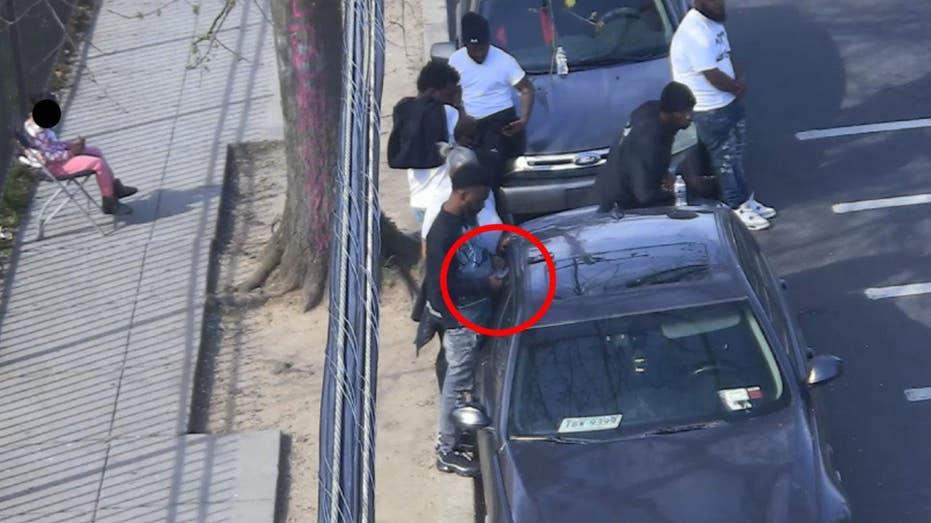
One of the most disturbing details cited by prosecutors involves a photo obtained during the investigation. Authorities say the image shows a woman purchasing cocaine while accompanied by a 5-year-old girl. After completing the transaction, the woman reportedly walked away holding the child’s hand.
Pirro described the situation as crossing a moral line beyond the already serious issue of selling drugs near a school. While federal prosecutors focused the indictment on the alleged dealers, Pirro made clear she believes additional accountability measures may be necessary for adults who expose children to drug transactions.
Calls for Tougher Local Laws on Child Endangerment
Pirro announced her intention to urge the Council of the District of Columbia to consider legislation addressing child endangerment in situations where adults knowingly bring minors into drug deals.
Under current D.C. law, criminal statutes addressing endangerment may not cover every circumstance involving exposure to illicit drug activity. Pirro’s proposal suggests expanding or clarifying local ordinances to explicitly criminalize taking a child to a narcotics transaction.
Such measures would align with broader efforts nationwide to strengthen protections around children in high-crime environments. Advocates argue that deliberately exposing minors to criminal conduct increases the risk of trauma, desensitization, and intergenerational cycles of crime.
The Broader Drug Crisis in America
While cocaine is at the heart of this case, law enforcement officials also recovered fentanyl — a synthetic opioid that has devastated families across the country. According to the Centers for Disease Control and Prevention, synthetic opioids remain a leading driver of overdose deaths in the United States.
The presence of fentanyl alongside cocaine signals a troubling overlap between drug markets. In many cases nationwide, fentanyl is mixed into other narcotics, increasing the risk of fatal overdoses — sometimes unknowingly to users.
The fact that such substances were allegedly circulating near an elementary school underscores why federal penalties for drug trafficking near schools are severe. Congress enacted school-zone enhancements precisely to deter traffickers from exploiting vulnerable areas.
Community Impact: Beyond the Arrests
For families in the Washington Highlands area, the impact of visible drug dealing extends beyond criminal statistics. Parents must explain why strangers gather outside their children’s school. Teachers must reassure students who witness alarming behavior during what should be a routine walk to class.
When children repeatedly observe drug transactions in daylight, authorities warn that it risks normalizing dangerous conduct. Law enforcement officials say dismantling such markets is not just about arresting suspects but reclaiming public spaces for law-abiding residents.
Faith leaders and community advocates have long called for a combination of firm policing and long-term community investment. Enforcement addresses the immediate threat; sustainable change requires mentorship, education, and economic opportunity.
An America-First Focus on Public Safety
Pirro emphasized that federal authorities will not tolerate criminal enterprises that target neighborhoods already struggling with violence. Her message was unambiguous: protecting children is non-negotiable.
“Selling cocaine near our kids isn’t just illegal. It’s an attack on the most vulnerable in our society.”
The coordinated arrests reflect what federal officials describe as a renewed focus on restoring order in the nation’s capital. While debates about criminal justice reform continue nationally, this case demonstrates a forceful use of federal conspiracy charges to dismantle alleged drug networks operating in sensitive areas.
What Happens Next?
The defendants will proceed through the federal court system. If convicted, they could face significant prison time due to the quantity of drugs alleged and the proximity to a school zone.
Federal sentencing guidelines consider drug weight, prior criminal history, and the presence of firearms. The Justice Department has consistently stated that prosecuting repeat offenders and violent gang members remains a priority.
Meanwhile, residents of Washington Highlands will be watching closely. The long-term question is whether removing one alleged street crew will result in sustainable safety improvements — or whether additional reforms and continued enforcement will be necessary.
Reclaiming America’s Neighborhoods
This case serves as a stark reminder that defending America begins at the local level — in schoolyards, sidewalks, and city blocks where children should be free to learn without exposure to criminal enterprises.
Parents across the country expect that when they send their kids off to school, those children will not walk past open-air drug markets. The Constitution’s promise of equal protection under the law does not stop at neighborhood boundaries.
Whether through stricter enforcement, legislative reforms, or sustained community engagement, the message from federal prosecutors is clear: drug trafficking near schools will meet a swift response.
For residents who have endured years of instability, the hope is that this prosecution marks the beginning of a genuine turnaround — one that restores safety, stability, and opportunity to a community that deserves nothing less.
As the case proceeds, Wake Up America News will continue monitoring developments, court proceedings, and any legislative proposals that emerge from this significant federal crackdown.