Louisiana Daycare Operator Charged After 3-Year-Old Left Unattended in Pool Dies
A heartbreaking tragedy in Ascension Parish, Louisiana, has once again placed a national spotlight on child safety, daycare oversight, and the critical responsibility adults carry when entrusted with young lives. Authorities have arrested a Prairieville woman after a 3-year-old boy drowned in her backyard swimming pool, reportedly remaining submerged and unsupervised for approximately 20 minutes.
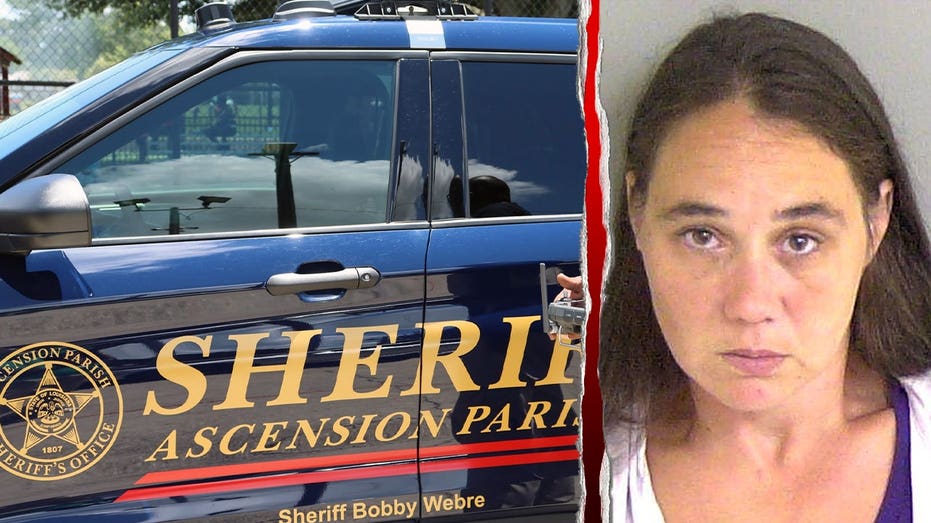
The Ascension Parish Sheriff’s Office (APSO) confirmed the arrest of 37-year-old Joann Johnson, who had been caring for the boy at her home. She now faces a charge of negligent homicide under Louisiana law. If convicted, she could face significant prison time for what investigators describe as a preventable tragedy.
This case is not just a local news story—it is a stark reminder for families across America about water safety, proper supervision, and the serious legal consequences that arise when responsibility is neglected.
What Authorities Say Happened
According to investigators, the drowning occurred on May 18 at Johnson’s residence in Prairieville, a community located within Ascension Parish, Louisiana. Deputies were dispatched around 3:50 p.m. after a 911 call reported an unresponsive child in a backyard pool.
When first responders arrived, they began lifesaving efforts immediately. Emergency personnel performed CPR before the child was transported by air ambulance to a nearby hospital. Despite the efforts of paramedics and medical staff, the young boy, identified by media reports as Ian Perez, was later pronounced dead.
The critical piece of evidence, authorities say, came from surveillance footage. Detectives reviewed video that allegedly showed two young children playing near the pool without flotation devices or active supervision. Investigators said the footage depicted the child falling into the water and remaining there without anyone intervening.
Perhaps most disturbing, officials stated the child remained submerged and unattended for approximately 20 minutes before being retrieved.
“One of the hardest parts of watching that video is seeing little Ian struggle for his life,” an APSO representative said in public remarks. “For over 20 minutes, there was no supervision.”
Authorities emphasized that while brief lapses in attention can happen, a prolonged period without supervision—particularly around a swimming pool—crosses into criminal negligence.
Understanding the Charge: Negligent Homicide Under Louisiana Law
Johnson has been charged under Louisiana’s negligent homicide statute, defined in Louisiana Revised Statutes § 14:32. The law describes negligent homicide as the killing of a human being by criminal negligence—meaning conduct that shows a reckless disregard for the safety of others.
Criminal negligence goes beyond a simple mistake. It implies that a reasonable person in the same situation would have recognized a serious risk and acted differently.
- The charge carries a possible sentence of up to 10 years in prison.
- Fines and other penalties may also apply.
- A conviction could result in long-term consequences beyond incarceration.
Johnson reportedly turned herself in and was released on a $100,000 bond.
This case now moves through the judicial system, where prosecutors will seek to prove that the lack of supervision amounted to criminal negligence under state law.
Not a Licensed Daycare
Officials confirmed that Johnson was not a licensed daycare provider. Instead, the arrangement was described as a “family friend” childcare situation.
In Louisiana, licensed childcare centers and home-based providers are regulated by the Louisiana Department of Children and Family Services (DCFS). Licensing requirements include inspections, safety standards, and staffing rules designed to protect children.
Unlicensed caregiving—particularly informal childcare arrangements among friends or acquaintances—often escapes this level of oversight. While many such arrangements are safe and well-meaning, they lack the structured safeguards that licensed providers must follow.
This tragedy underscores the importance of parents verifying:
- Licensing status
- Safety procedures
- Access to potentially dangerous environments such as pools
- Emergency preparedness plans
In this case, the home reportedly had a backyard swimming pool accessible to young children—an environment that safety experts consistently identify as high-risk.
The Sobering Reality of Childhood Drownings
Drowning remains one of the leading causes of death for young children in the United States. According to the Centers for Disease Control and Prevention (CDC), drowning is a leading cause of unintentional injury death for children between the ages of 1 and 4.
Key facts from national data include:
- Thousands of Americans die from drowning each year.
- For children ages 1–4, most drownings occur in residential swimming pools.
- Many incidents happen quickly and silently—often within minutes.
Unlike the dramatic scenes often portrayed in movies, drowning is typically quiet. There may be no splashing, yelling, or obvious distress signs. A child can slip beneath the surface in seconds.
Safety experts repeatedly stress that “active supervision” means watching children continuously and staying within arm’s reach near water. Simply being nearby—or inside a house while children are outdoors—is not enough.
Pool Safety: What Every American Family Should Know
The U.S. Consumer Product Safety Commission (CPSC) has long warned about the dangers of unsecured residential pools. They recommend a “layers of protection” approach to pool safety.
Those layers include:
- Four-sided fencing at least four feet high, completely separating the pool from the house.
- Self-closing, self-latching gates.
- Door alarms leading to pool areas.
- Pool covers and safety barriers.
- Constant, distraction-free supervision.
- CPR training for caregivers and parents.
Floating devices or inflatable arm bands are not substitutes for adult supervision. Nor is assuming that “it won’t happen here.”
As summer approaches and children spend more time outdoors, law enforcement agencies across the country routinely remind families to review their safety measures. In this case, authorities emphasized that hosting children around a pool requires enhanced precautions.
“If you’re going to have a pool and have children around that pool, especially children who are not yours, you better make sure you have every safety measure in place,” an APSO representative said.
A Devastated Family
The victim’s family released an emotional statement describing Ian as energetic, charismatic, and full of life. He loved riding his bicycle, playing with toy cars, and spending time with his older sister.
His mother was described as a devoted single parent whose children were the center of her world.
No parent should ever receive the phone call that their young child will not be coming home. When a death is believed to be preventable, the grief is often compounded by anger and unanswered questions.
For this family, what should have been an ordinary day ended in unimaginable loss.
The Broader Legal and Moral Questions
This case raises difficult but necessary questions about accountability in informal childcare settings.
America is a nation built on personal responsibility. When parents entrust their children to another adult, that trust carries enormous weight. The adult assuming care becomes legally and morally responsible for that child’s safety.
Courts will ultimately determine criminal responsibility in this case. But regardless of the legal outcome, the public discussion extends further:
- Should informal daycare arrangements be more regulated?
- Are families adequately educated about pool safety risks?
- Should insurance or safety requirements be stricter for homes with pools where children are regularly cared for?
These are conversations communities across the country may need to revisit as summer begins.
Preventing Another Tragedy
While the criminal justice system addresses what happened in Prairieville, other families can act now to prevent similar heartbreak.
Experts recommend the following immediate steps:
- Install proper fencing that completely isolates the pool.
- Assign a dedicated “water watcher” during gatherings—an adult whose only job is to monitor children.
- Enroll in CPR classes through local organizations such as the American Red Cross.
- Verify that any caregiver understands water safety rules and emergency response procedures.
- Teach children basic water safety skills as early as possible.
No amount of precaution can reverse what has already happened for the Perez family. But decisive action can save future lives.
A Warning as Summer Approaches
The timing of this tragedy—just weeks before summer break—serves as a powerful warning. As school lets out and temperatures rise, children naturally gravitate toward water.
Backyard pools, lakes, rivers, and beaches all pose risks. Yet residential pools are particularly dangerous because they create a false sense of safety within the home environment.
National data confirms that most young-child drownings occur not at public beaches, but at private homes.
Law enforcement officials hope this case will prompt families to reassess their safety measures and supervision practices. Preventable deaths demand serious attention—not only from prosecutors but from everyday Americans committed to protecting our nation’s children.
Justice and Responsibility
As the legal process unfolds, the focus remains on accountability under Louisiana law. Prosecutors must demonstrate that the supervision lapse rose to the level of criminal negligence. The defense will have the opportunity to contest that claim in court.
But beyond the courtroom, one truth stands clear: three-year-old Ian Perez’s life was cut tragically short.
In America, freedom and responsibility go hand in hand. Whether operating a daycare, watching a neighbor’s child, or hosting a backyard gathering, the duty to protect young lives is sacred.
This devastating loss should serve as more than a headline—it should serve as a call to action. Every parent, grandparent, caregiver, and homeowner should ask: Are we doing everything within our power to protect the children in our care?
Because in the end, nothing is more patriotic—or more profoundly American—than safeguarding the next generation.