Minnesota Fatal Crash Raises Questions About Responsibility, Prescription Drugs, and Road Safety
A tragic head-on collision on a northern Minnesota highway has left one family mourning and a rural community searching for answers. A 43-year-old woman accused of causing the fiery crash claims her dog interfered with the steering wheel moments before impact, a statement that has now become central to a criminal case in Roseau County, Minnesota.
The case is more than a bizarre courtroom defense. It touches on broader concerns involving prescription medication use, driver responsibility, and the legal consequences of operating a vehicle in a reckless or impaired condition. Authorities say the facts surrounding the crash point to a far more serious issue than canine interference.
What Happened on Minnesota Highway 11
The collision took place on June 27 along Minnesota Highway 11, a major east-west route traversing the northern part of the state. The roadway is commonly used by local residents, agricultural traffic, and cross-border travelers near Canada.
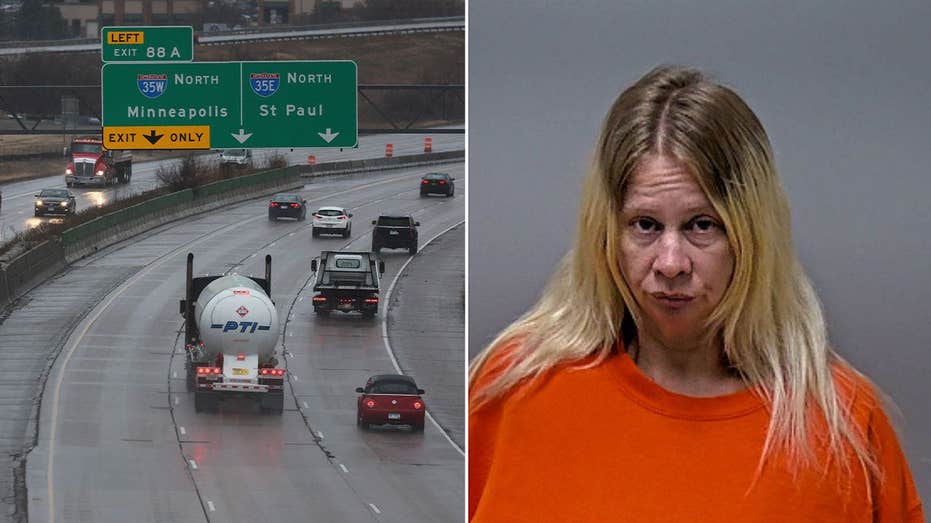
According to a criminal complaint filed in Roseau County District Court, Shauna Rae Dokken, 43, was driving a Ford F‑250 pickup truck when multiple motorists began noticing alarming behavior.
Witnesses told investigators that Dokken was:
- Swerving within her lane
- Crossing over the center line
- Drifting fully into oncoming traffic
- Driving in a manner that caused other motorists to fear for their safety
One concerned driver reportedly called 911 and attempted to follow Dokken’s truck after observing it cross entirely into the opposite lane.
Authorities allege that the pickup ultimately crossed the highway’s center line again and collided head-on with a Kia Sorento driven by 82-year-old Barbara Lee Welberg.
Welberg was pronounced dead at the scene. Dokken survived the crash and was transported to a local hospital with injuries described as not life-threatening.
The Victim: A Life Lost at 82
Barbara Lee Welberg, 82, was traveling lawfully when her vehicle was struck. While official obituaries and personal family statements have not been widely disseminated at this stage, the loss of an 82-year-old community member reverberates deeply in small-town America.
Fatal crashes involving elderly drivers are often heavily scrutinized, but in this case investigators have made clear that Welberg was not the suspected cause of the collision. Instead, she appears to have been an innocent motorist struck in her own lane.
For her family, the legal debate now unfolding in court cannot undo the loss of a mother, grandmother, or friend. In Minnesota, vehicular homicide cases often take months to resolve as evidence is examined and toxicology reports are finalized.
The Criminal Charge: Vehicular Homicide by Gross Negligence
Dokken has been charged with criminal vehicular homicide for allegedly operating a motor vehicle in a grossly negligent manner. The charge falls under Minnesota law governing criminal vehicular operation and homicide, as outlined by the Minnesota Statutes Section 609.2112.
Under state law, a person can face criminal vehicular homicide charges if they cause another person’s death while operating a motor vehicle through:
- Gross negligence
- Impaired driving due to alcohol or controlled substances
- Leaving the scene of an accident
- Certain other reckless or unlawful acts
Gross negligence goes beyond simple carelessness. Prosecutors typically must show extreme disregard for human life or safety — conduct that poses a substantial and unjustifiable risk.
If convicted, criminal vehicular homicide in Minnesota can carry significant prison sentences and financial penalties.
The Dog Defense: A Claim Under Scrutiny
According to the criminal complaint, Dokken provided varying accounts of what led to the crash. At one point, authorities say, she told investigators that her dog grabbed the steering wheel just before the collision.
While pet-related driving distractions are not unheard of, claims that an animal physically seized control of a vehicle are rare and often difficult to substantiate.
Distracted driving involving pets has been a documented safety issue. The National Highway Traffic Safety Administration (NHTSA) warns that any distraction that takes attention away from the road increases crash risk. Pets jumping onto a driver’s lap, blocking controls, or causing sudden movements can contribute to dangerous situations.
However, legal experts frequently note that drivers remain responsible for securing animals inside their vehicles. Several states have even considered or passed laws addressing unrestrained pets in vehicles due to safety concerns.
In a criminal case involving death, such a defense will likely face intense scrutiny from prosecutors, accident reconstruction experts, and potentially a jury.
Prescription Medications and Possible Impairment
Perhaps more significant than the canine explanation are statements Dokken allegedly made regarding prescription medications.
According to court records, she told investigators she had taken:
- Buspar (buspirone)
- Lorazepam
- Adderall
She denied consuming alcohol, and a preliminary breath test reportedly registered 0.00.
Buspar is commonly prescribed for anxiety. Lorazepam is a benzodiazepine that can cause drowsiness, slowed reaction time, and impaired judgment. Adderall is a stimulant typically used to treat ADHD.
The U.S. Food and Drug Administration (FDA) has issued warnings about benzodiazepines like lorazepam due to risks of sedation and cognitive impairment. Even when taken as prescribed, combining medications — or misusing them — can alter perception, coordination, and reaction times.
Toxicology tests will play a central role in this case. Authorities obtained a search warrant for a blood sample, which was sent to the Minnesota Bureau of Criminal Apprehension (BCA) for laboratory analysis.
The results could determine whether prescription medications were present at therapeutic levels, abused levels, or combined in a way that created impairment.
Witness Statements and Slurred Speech
Investigators noted that responding troopers observed slurred speech when interacting with Dokken after the crash. Slurred speech is commonly associated with intoxication but may also arise from certain medications, head injuries, or shock.
Additionally, the complaint includes statements from Dokken’s significant other, who reportedly told officers she had previously misused prescription medications.
These details may become critical as prosecutors determine whether to pursue additional charges — potentially including driving under the influence of controlled substances, depending on laboratory findings.
Legal Process and Presumption of Innocence
As of the latest court records, Dokken remained in custody following a detention order signed by a district judge.
The case is proceeding through Minnesota’s judicial system, which operates under procedures outlined by the Minnesota Judicial Branch. At this stage, the allegations contained in the complaint have not been proven in court.
All defendants are entitled to representation, whether by a public defender or private attorney, and are presumed innocent until proven guilty beyond a reasonable doubt.
The Roseau County Attorney’s Office has indicated that the investigation remains ongoing and that additional charges could follow depending on toxicology test results.
Prescription Drugs and Driving: A Growing National Concern
Although alcohol-impaired driving often dominates headlines, prescription drug impairment has become an increasing issue nationwide.
According to data compiled by the Centers for Disease Control and Prevention (CDC), driving under the influence of medications — including sedatives, opioids, and anti-anxiety drugs — can significantly impair reaction time and decision-making.
Many Americans assume that if a drug is legally prescribed, it cannot compromise driving ability. That assumption can be dangerously wrong. Medication labels often warn patients to avoid operating heavy machinery or automobiles until they understand how the drug affects them.
When multiple medications are combined, especially those affecting the central nervous system, risks increase further.
Responsibility Behind the Wheel
The core issue in this case may ultimately come down to responsibility. Every driver who takes the road in America accepts a duty of care — a legal and moral responsibility to operate a vehicle safely.
This includes:
- Ensuring physical and mental fitness to drive
- Avoiding impairment from alcohol or drugs
- Securing pets and cargo properly
- Remaining attentive and focused
While tragic accidents do occur, courts often distinguish between unavoidable incidents and those resulting from reckless or grossly negligent conduct.
A Community Waiting for Answers
In rural Minnesota, fatal crashes are not just statistics; they impact entire communities. Highway 11 is a lifeline for local towns, farms, and families. The death of an elderly resident in a violent head-on crash leaves lasting scars.
As toxicology analysis continues at the state level, prosecutors are carefully reviewing the evidence. Whether the final outcome centers on prescription drug impairment, negligence, or some other factor, the justice system will ultimately determine legal responsibility.
For now, one fact remains undeniable: an 82-year-old woman lost her life in a crash that witnesses say never should have happened.
Americans across the country understand that driving is not a casual privilege — it is a solemn responsibility. This case serves as a sobering reminder that distractions, impairment, and poor judgment on our highways can destroy lives in seconds.
Wake Up America News will continue to monitor developments as laboratory results are released and the case proceeds through Minnesota courts.