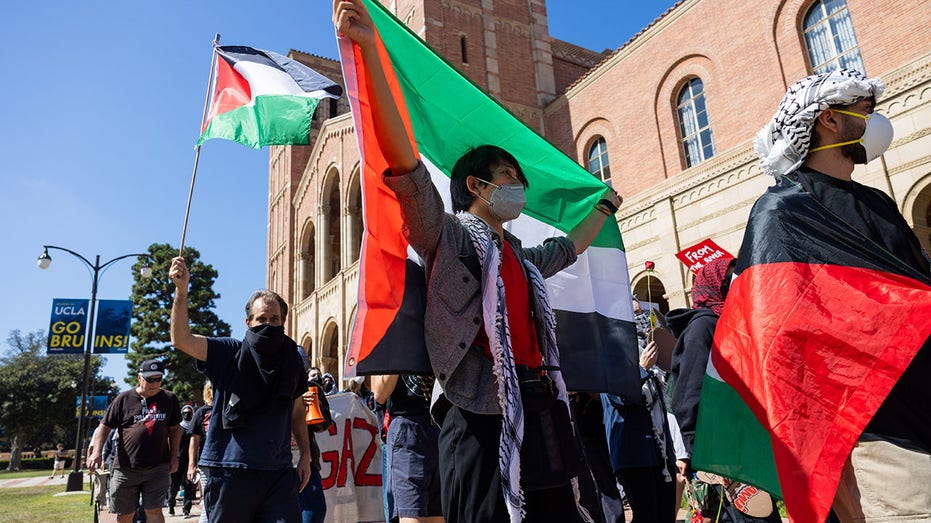
Mob Rule at UCLA and the Alarming Surge of Antisemitism in America and Abroad
Across the United States and Europe, troubling signs of rising antisemitism are forcing leaders, courts, and everyday citizens to confront a hard truth: hatred once thought relegated to history is resurfacing in the open. From violent confrontations on elite college campuses to inflammatory rhetoric by political figures at home and abroad, recent events underscore the seriousness of the moment.
This week’s major developments span a federal civil rights lawsuit against the University of California, Los Angeles, a high-profile political controversy in Texas, strong words from Israel’s ambassador to France, and public repudiations of extremism within American politics. Taken together, these stories demand more than passing attention—they require accountability, moral clarity, and leadership.
Federal Lawsuit Alleges Violence and “Jew-Free Zones” at UCLA
At the center of national outrage is a federal lawsuit alleging that Jewish students at UCLA were physically assaulted during anti-Israel protests and systematically blocked from accessing parts of campus. According to the complaint, students were beaten with sticks, pepper-sprayed, shoved, and denied entry to certain areas controlled by demonstrators.
The lawsuit claims that the unrest escalated into the establishment of what plaintiffs describe as “Jew-free zones”—areas where Jewish students were allegedly prevented from entering unless they publicly disavowed Israel. If proven in court, such conduct would represent a clear violation of federal civil rights protections.
UCLA is part of the broader University of California system, a public institution obligated to comply with federal anti-discrimination statutes. Among them is Title VI of the Civil Rights Act of 1964, which prohibits discrimination based on race, color, or national origin in programs receiving federal funding. In recent years, the U.S. Department of Education has clarified that antisemitic harassment can fall under Title VI when it targets students based on shared ancestry or ethnic characteristics.
The plaintiffs argue that university officials failed to act decisively to restore order and protect students. They say administrators allowed makeshift checkpoints and protest encampments to effectively replace campus security in portions of the university. That alleged inaction, they contend, fostered an environment of hostility and intimidation.
Campus Protests or Civil Rights Violations?
American universities have long defended students’ rights to protest. The First Amendment remains one of this nation’s most sacred guarantees, protecting speech even when it is controversial or unpopular. However, constitutional freedoms do not extend to violence, coercion, or discrimination.
Legal scholars often draw a bright line between protected speech and unlawful conduct. Chanting slogans, distributing literature, and holding signs are generally lawful exercises of free expression. But blocking students from attending classes, assaulting individuals, or creating exclusionary spaces based on religion or ethnicity falls outside protected activity.
Critics of how certain universities have handled recent protests argue that administrators feared appearing heavy-handed and therefore delayed intervention. Supporters of stronger enforcement say this hesitation placed Jewish students at risk and signaled tolerance for antisemitic hostility.
The UCLA lawsuit is likely to test how courts interpret institutional responsibility in volatile protest situations. If the plaintiffs prevail, the case could set meaningful precedent for how colleges nationwide must respond when demonstrations cross into alleged discrimination.
National Security Perspective: Expanding Abraham Accords Amid Tensions
The situation on American campuses does not exist in a vacuum. It unfolds against the backdrop of broader geopolitical tensions in the Middle East. Former U.S. Central Command chief Gen. Joseph Votel recently discussed ongoing diplomatic efforts to expand the Abraham Accords, the historic normalization agreements first brokered in 2020 between Israel and several Arab nations.
Supporters of the accords have argued that strengthening ties between Israel and its neighbors reduces regional instability, counters extremist threats, and fosters economic cooperation. Expanding those agreements remains a strategic priority for many in Washington who believe peace through strength is the surest path to long-term security.
At the same time, policymakers continue to weigh approaches toward Iran, whose regime has long been accused of sponsoring proxy groups hostile to Israel and the United States. Diplomatic outreach and deterrence efforts operate side by side in an increasingly complicated security landscape.
The flare-up of antisemitic rhetoric and violence at home raises additional concerns: when foreign conflicts inflame domestic tension, American institutions must be vigilant in preventing imported hatred from taking root on U.S. soil.
Dave Portnoy Rejects Political Collaboration Over Controversial Candidate
Beyond campus unrest, antisemitism has surfaced in political arenas as well. Barstool Sports founder Dave Portnoy, who is Jewish, forcefully rejected an outreach attempt tied to Maine U.S. Senate candidate Graham Platner. According to reporting, a political operative suggested Portnoy collaborate in criticism of Boston Red Sox ownership.
Portnoy publicly condemned the overture, citing controversy surrounding a Totenkopf tattoo associated with the candidate. The Totenkopf symbol has historical ties to Nazi SS units during World War II, a chilling association that carries heavy historical weight.
Rather than treating the request as routine political messaging, Portnoy denounced it as insensitive and unacceptable. His refusal to engage highlighted the reputational consequences that can accompany associations with extremist symbolism, whether intentional or not.
In today’s digital media environment, figures with large platforms can rapidly shape public perception. Portnoy’s swift rebuke demonstrated that antisemitic imagery or undertones will increasingly be scrutinized—not only by advocacy groups, but by a broader audience unwilling to normalize such ties.
Texas Voters Repudiate “Imprison Zionists” Rhetoric
In Texas, Democratic state House candidate Maureen Galindo faced intense backlash after calling for “American Zionists” to be imprisoned. The remarks triggered widespread condemnation across the political spectrum.
Prominent Democrats, including House Minority Leader Hakeem Jeffries, distanced themselves from the rhetoric, labeling it unacceptable. Progressive figures also reportedly declined to defend the comments, underscoring how inflammatory language can become politically disqualifying.
When primary runoff voters went to the polls, Galindo was defeated by more moderate Democrat Johnny Garcia. The outcome serves as a reminder that despite loud voices on social media, voters often reject extreme proposals that appear rooted in collective punishment or ideological hostility.
The episode illustrates an essential point: free speech protects even controversial views, but the ballot box remains a powerful check on rhetoric perceived as crossing moral lines.
Antisemitism Surges in France as Ambassador Sounds Alarm
The resurgence of antisemitic incidents is not confined to the United States. In France, authorities report a dramatic rise in anti-Jewish attacks and harassment. The French Ministry of the Interior has documented significant increases in reported antisemitic acts during periods of heightened Middle Eastern tensions.
Against that backdrop, Israeli Ambassador to France Joshua Zarka delivered a stark warning. He compared the rhetorical style of far-left leader Jean‑Luc Mélenchon, head of La France Insoumise, to the demagogic strategies of Adolf Hitler—specifically the tactic of uniting followers against a singular, vilified enemy.
Such comparisons are provocative and controversial. Yet they reflect deep concern among Jewish communities who see echoes of historical scapegoating. France is home to the largest Jewish population in Europe, and past terror attacks—such as the 2015 Hyper Cacher supermarket siege—remain fresh in public memory.
When rhetoric blurs into demonization, leaders must tread carefully. Criticism of a foreign government’s policies is legitimate political discourse. But language that appears to single out Jews collectively, or that fuels hostility toward Jewish citizens, risks inflaming already fragile tensions.
New York Politics and Economic Consequences
Meanwhile, in New York City, former executive director of the Mayor’s Office to Combat Antisemitism Moshe Davis has raised concerns about policies he believes weaken protections against anti-Jewish discrimination. The City of New York has historically maintained close economic and cultural ties with Israel, particularly in technology and cybersecurity sectors.
Critics of recent city leadership decisions argue that severing business connections or scaling back cooperative initiatives could carry economic costs, including potential impacts on jobs, investment, and retirement funds. Supporters of the policy shifts counter that municipal governance should prioritize local concerns over foreign policy symbolism.
What remains clear is that New York—home to one of the world’s largest Jewish communities outside Israel—sits at the center of these debates. The city’s approach to public safety, campus activism, and international partnerships will inevitably be scrutinized as a barometer of where American urban politics stands on combating antisemitism.
The Legal and Cultural Crossroads
America now finds itself at an inflection point. Institutions once praised for pluralism are being tested in real time. Law enforcement agencies, including the U.S. Department of Justice, have increasingly signaled that antisemitic violence will be investigated as potential hate crimes when evidence supports that classification.
Universities face pressure to clarify policies and enforce codes of conduct consistently. Lawmakers debate whether additional federal guidance is necessary to address modern manifestations of Jew-hatred, particularly as conflicts abroad spill into domestic activism.
- Should universities impose clearer protest boundaries to safeguard equal access?
- How can free speech be preserved without tolerating intimidation?
- What responsibilities do public officials bear when rhetoric risks fueling hostility?
These are not theoretical questions. They affect students walking to class, families attending worship services, and citizens navigating political discourse.
The Broader American Imperative
The United States has long prided itself on being a haven for religious freedom. From the founding era forward, our constitutional order rejected the sectarian animosities that plagued parts of Europe for centuries. That heritage imposes a duty on today’s leaders to confront antisemitism decisively, whether it emerges from fringe extremists or from mainstream political rhetoric.
Patriotism does not mean silencing dissent. It means upholding the rule of law equally for all Americans. When Jewish students allege that they were assaulted or excluded from campus spaces, those claims deserve thorough investigation. When political candidates invoke collective punishment against “Zionists,” voters have the right to weigh the implications. When foreign leaders’ rhetoric is accused of echoing dark chapters of history, public scrutiny is warranted.
“The way he uses the idea of uniting against one enemy by speaking of Israel is similar to the way Hitler used to speak about the Jews.” — Israeli Ambassador Joshua Zarka
Such statements should prompt sober reflection rather than reflexive dismissal. History demonstrates that antisemitism rarely remains confined to words. It metastasizes when normalized, especially during periods of social upheaval.
Accountability and Leadership
The path forward requires leadership anchored in principle. That means:
- Universities reaffirming zero tolerance for violence and discrimination.
- Political parties enforcing standards that reject rhetoric targeting groups based on ethnicity or religion.
- Law enforcement agencies investigating alleged hate crimes thoroughly and transparently.
- Civic institutions reinforcing education about the Holocaust and the enduring dangers of scapegoating.
Accountability must be even-handed. Pro-Israel voices, pro-Palestinian activists, and all others operate within the same legal and moral framework. The American standard does not change based on ideology.
A Test of American Resolve
From the lawsuit unfolding at UCLA to political repudiations in Texas and diplomatic warnings from Europe, the message is unmistakable: antisemitism is not a relic of the past. It is a present challenge requiring vigilance.
The United States has overcome waves of prejudice before by affirming its foundational ideals—equal protection under law, freedom of religion, and the rejection of mob rule. The coming months will reveal whether our institutions rise to the occasion again.
For students seeking safety, voters demanding accountability, and communities committed to liberty, the stakes are clear. America’s promise depends on confronting hatred wherever it appears—and ensuring that, on our soil, no citizen is ever forced to navigate a “Jew-free zone” or fear violence because of who they are.
Wake Up America News will continue to follow these developments closely, because defending liberty requires both courage and clarity in uncertain times.