Texas Judge Stands Firm on Courtroom Camera Ban in Karmelo Anthony Murder Trial
In the aftermath of one of the most closely watched criminal trials in recent Texas history, Judge John Roach of the 296th Judicial District Court of Collin County, Texas, is making it clear he has no regrets about keeping cameras out of his courtroom.
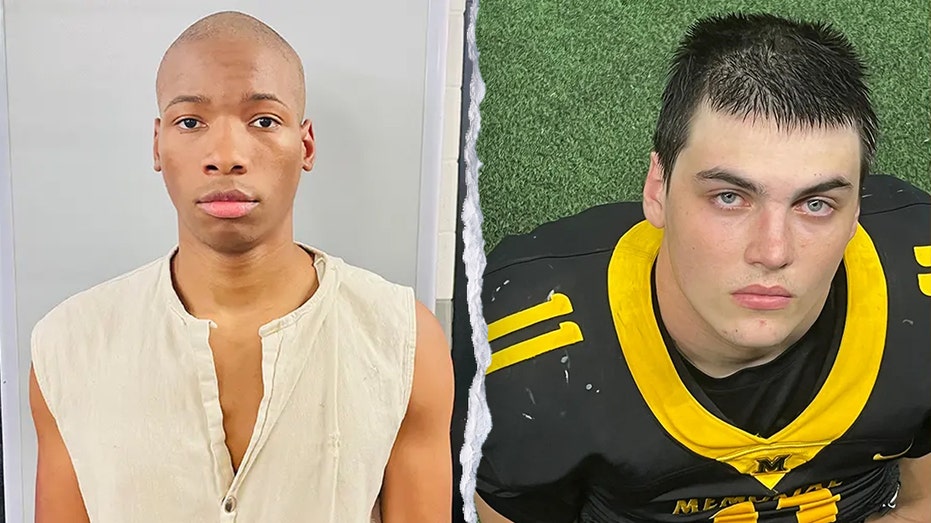
The trial of Karmelo Anthony — convicted in the deadly stabbing of 17-year-old Austin Metcalf during a high school track meet in Frisco, Texas — drew intense public interest, heated online debate, and widespread media scrutiny. Many demanded live streaming and expanded press access. Judge Roach declined.
This week, following the jury’s decision to sentence Anthony to 35 years in prison, Roach defended that choice, calling it “an easy decision” rooted in one principle: fairness under the law.
A Tragedy at a High School Track Meet
The case stems from a fatal confrontation during a high school athletic event that shocked the North Texas community. Austin Metcalf, a student at Memorial High School, was stabbed and later died from his injuries. The incident happened in public, amid what should have been a routine sporting event for teenagers and their families.
Prosecutors charged Karmelo Anthony with murder under Texas Penal Code §19.02, which defines murder as intentionally or knowingly causing the death of another person. After a full trial and deliberations, a Collin County jury found Anthony guilty.
On Tuesday, the same jury assessed his punishment at 35 years behind bars — a significant sentence reflecting the gravity of the crime while also acknowledging, as jurors often must, the totality of the circumstances presented at trial.
Why Cameras Were Barred from the Courtroom
From the outset, this case carried the markings of a flashpoint: discussions of race, claims of self-defense, online commentary, and strong emotions on all sides. In an era where social media can amplify — and distort — nearly every development in real time, Judge Roach made an early procedural decision: no cameras and no livestreaming.
Under Texas Rules of Judicial Administration and guidance established by the Texas Judicial Branch, trial judges retain discretion over whether electronic media coverage is permitted in courtrooms. It is not an automatic right. It is a balancing act.
Roach explained that his core responsibility was not to appease the media or satisfy public curiosity, but to protect the integrity of the legal process.
“My primary goal in every case is to make sure the defendant and the prosecution get a fair trial. Period.”
For Roach, the decision became straightforward when weighed against the risks. Cameras can alter behavior. Witnesses may feel inhibited or performative. Jurors, even when instructed carefully, may become aware of public narratives surrounding the case. In high-profile trials, the presence of broadcast coverage can raise the temperature inside and outside the courtroom.
Balancing Transparency and Fairness
America’s justice system rests on two fundamental pillars: transparency and due process. Open courts allow the public to observe proceedings, ensuring accountability. At the same time, the Sixth Amendment guarantees defendants the right to a fair trial.
This tension is not new. From the televised spectacle of the O.J. Simpson trial in the 1990s to more recent headline-grabbing criminal proceedings, judges have wrestled with where to draw the line.
In the Anthony trial, members of the media and segments of the public pushed for cameras and live feeds, arguing that modern transparency demands digital access. Judge Roach countered that the courtroom itself was open to the public. Reporters were permitted to attend. Proceedings were not secret.
The distinction, in his view, is critical:
- Open courtroom access ensures physical public observation and press reporting.
- Livestreaming and broadcast amplify and disseminate courtroom moments instantly to potentially millions, often without context.
- Viral clips can generate intense outside pressure on jurors and witnesses, even inadvertently.
Roach stated plainly that his obligation was to follow the law and protect both sides from outside interference. “As long as I follow the law, I sleep well at night,” he said.
A Jury Selected Under the Law
After a careful process of voir dire — the formal juror selection conducted under Texas law — a jury was empaneled. The composition of that jury became part of the broader public debate, particularly amid claims that the case carried racial overtones.
Yet the legal standard governing juror selection is clear. Courts are bound by constitutional safeguards that prohibit discrimination while also ensuring an impartial panel. The U.S. Supreme Court has long held that both prosecution and defense must exercise strikes and challenges in a manner consistent with equal protection principles.
Judge Roach signaled confidence in the panel that ultimately decided Anthony’s fate.
“They were picked based upon the law, they listened to the facts, it happened in this courtroom, and they got a verdict.”
In other words, he emphasized process. Not speculation. Not online activism. Not hashtags. The process.
Addressing Claims of Bias
High-profile trials often produce rumors and accusations aimed at nearly every participant in the system. In this case, some critics suggested that Judge Roach might have had a personal connection to the victim’s family.
Roach categorically rejected that claim.
He stated that prior to the trial, he would not have recognized Austin Metcalf’s father if he “walked up and said hello.” The implication was direct: the verdict emerged from evidence presented in open court, not from hidden relationships or outside loyalties.
For judges, the appearance of impartiality is as critical as actual impartiality. Ethical rules require recusal when a genuine conflict exists. Judges across Texas adhere to the Texas Code of Judicial Conduct, designed to maintain public confidence in the judiciary’s independence.
The Broader Climate: Social Media and “Trial by Internet”
One of the unspoken realities of this case is the modern information landscape. Criminal trials today unfold not only inside the courtroom, but also on X, Facebook, TikTok, YouTube, and countless other platforms.
Commentary — often uninformed — spreads rapidly. Narratives form quickly and harden. Supporters and critics of defendants can organize, fundraise, and pressure officials within hours.
This environment poses new challenges for courts:
- Potential jurors may be exposed to viral commentary before or during trial.
- Witnesses can be targeted with harassment or public shaming campaigns.
- Attorneys may have to combat misinformation circulating outside the courtroom.
By excluding cameras, Judge Roach sought to limit direct visual material that could be clipped, reframed, or sensationalized. While reporters still covered each development, the absence of video arguably reduced the likelihood of moments being taken out of context and broadcast millions of times within minutes.
Critics call that restrictive. Supporters call it prudent.
A Sentence That Reflects Serious Consequences
Ultimately, the Anthony trial was about accountability for a life lost. Austin Metcalf was 17 years old — a young American with a future abruptly cut short. His death reverberated through his family, friends, and the broader Frisco community.
The jury’s 35-year sentence underscores the seriousness with which Texas law treats unlawful homicide. Under Texas sentencing guidelines for murder, penalties can range up to life imprisonment depending on the circumstances.
Anthony, described by Judge Roach after the trial as a “nice young man who committed a crime,” now faces decades in state custody. The judge remarked that Anthony appears to understand more fully than ever before the weight of his actions.
That observation captures one of the more difficult truths in criminal justice: defendants are often young. They are sometimes described as respectful or promising. And yet, when a line is crossed and a life is taken, the consequences are severe — as they must be in a system that values innocent life.
The Role of the Judge in America’s Courtrooms
In emotionally charged cases, calls for public access can be loud — and understandable. Americans cherish open courts and freedom of the press. But the role of a trial judge is not to manage public opinion.
It is to:
- Ensure both prosecution and defense receive equal treatment under the law.
- Guard the jury against improper influence.
- Rule on objections and evidence fairly.
- Follow established statutes and constitutional requirements.
Judge Roach made clear that popularity is not part of that job description.
“I know I made people mad,” he acknowledged. “But I’m not here to make them happy either.”
Transparency in Context
It is important to note that barring cameras does not equate to secrecy. The courtroom remained open. Accredited journalists attended. Reports were published daily. The public could physically observe proceedings consistent with space and security limitations.
This reflects a longstanding American standard: access does not always mean unlimited digital broadcast. Many federal courts, including under policies overseen by the U.S. Courts, still restrict live broadcasting in criminal trials.
Judges routinely weigh:
- The safety of participants.
- The potential intimidation of witnesses.
- The risk of prejudicing jurors.
- The long-term fairness of the record.
In that framework, Roach’s decision aligns with practices seen across jurisdictions in high-profile matters.
Justice in a Divided Era
The Anthony case unfolded in a time when nearly every controversial event is filtered through cultural and political lenses. Narratives form quickly. Camps solidify. Trust in institutions is tested.
And yet, amid that turbulence, a local Texas jury gathered in a courtroom, listened to testimony, evaluated evidence, and delivered a verdict. No viral clip decided this case. No trending hashtag delivered the sentence. Twelve citizens did.
That is how the American system is designed to work.
Judge Roach’s defense of his decision boils down to preserving that process. Agree or disagree, his rationale reflects a belief that the courtroom should remain a place where facts and law take precedence over spectacle.
The Takeaway for Americans
For the residents of Frisco and Collin County, the outcome closes a painful chapter — though no verdict can restore a lost life. For the broader nation, the case serves as a reminder of the delicate balance between transparency and due process.
In the age of instant broadcasting and digital outrage, the measured pace of a courtroom can seem almost old-fashioned. But it is in that deliberate structure — governed by statute, guided by precedent, and anchored in constitutional principles — that justice is meant to be found.
Judge John Roach’s message was simple: his loyalty is to the law.
And in a country built on the rule of law, that commitment remains the foundation of freedom.
Wake Up America News — Your Source for Patriotic News.