Transit Violence in Major U.S. Cities Sparks Renewed Demands for Accountability
Violent attacks on public transportation systems in Atlanta, New York City, and Charlotte have once again put the safety of American commuters front and center. In each case, the suspects were individuals with prior arrests or criminal histories—raising urgent questions about how repeat offenders are monitored, prosecuted, and, ultimately, returned to the streets.
For millions of Americans who depend on trains, buses, and light rail to get to work and back home to their families, public transit is not an abstract policy debate. It is a daily necessity. When violence erupts inside stations or railcars, the consequences are deeply personal. The latest incidents have intensified calls for tougher enforcement, better tracking of violent offenders, and greater accountability from local prosecutors and judges.
Atlanta’s MARTA System Under Fire After Shooting and Fatal Stabbing
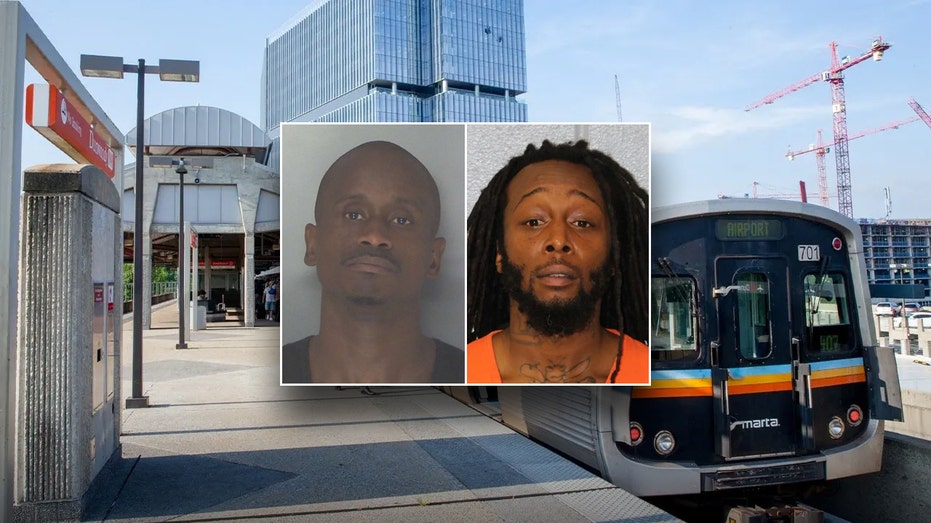
In Atlanta, a June shooting at a Midtown station operated by the Metropolitan Atlanta Rapid Transit Authority (MARTA) left a 17-year-old wounded and commuters shaken.
Authorities allege that 42-year-old Anthony Tyrone Gresham, a convicted felon with multiple prior convictions, approached a train car where the teenager was seated and opened fire. According to investigators, Gresham fired three shots, striking the victim in the hand and leg before fleeing the scene.
The injured teen was transported to a nearby hospital and is expected to recover. But the suspect’s flight triggered a multi-agency manhunt involving local and federal authorities. Gresham was apprehended two days later in Douglasville, Georgia.
Federal prosecutors have charged Gresham with committing an act of violence with intent to cause serious bodily injury on a mass transportation system, along with possession of ammunition by a convicted felon and discharging a firearm during a crime of violence. The U.S. Attorney’s Office for the Northern District of Georgia, part of the U.S. Department of Justice, is handling the federal case.
The shooting came amid heightened scrutiny of MARTA’s safety protocols following a separate and even more tragic attack.
Just days earlier, 66-year-old great-grandmother Margaret Swan was fatally stabbed aboard a MARTA train. In that case, authorities charged 25-year-old John Elijah Matthews with committing an act of violence using a dangerous weapon with intent to cause death on a mass transportation system. He also faces felony murder charges in Fulton County.
The back-to-back incidents have fueled concerns among Atlanta residents that violent individuals with prior encounters in the justice system are not being effectively tracked or detained.
How Federal Transit Crime Statutes Come Into Play
Mass transportation systems receive federal protection under specific criminal statutes. Acts of violence on public transit can trigger federal charges under laws designed to safeguard interstate commerce and ensure passenger safety.
The Department of Justice can pursue enhanced penalties when violence occurs on transportation systems that serve the public. These charges often carry significant prison time, particularly when firearms or deadly weapons are involved.
While federal intervention may provide stronger penalties, critics argue that it often comes only after a tragedy has already occurred. The deeper issue, many say, involves how repeat offenders are handled at the state and local levels before crimes escalate.
New York’s Penn Station Slashing Rampage
In New York City, another alarming case unfolded inside one of the nation’s busiest transportation hubs.
On June 7, shortly after 7 p.m., a suspect identified as 51-year-old Hector Deleon allegedly went on a stabbing and slashing spree inside Penn Station, targeting commuters in the New Jersey Transit concourse. The chaotic scene left five people wounded, one of them seriously.
Penn Station, which serves Amtrak, the Long Island Rail Road, and NJ Transit, is one of the busiest transit facilities in North America. An attack there does not just threaten individuals—it disrupts a critical artery of the regional economy.
Authorities say Deleon had at least seven prior arrests. In 2022, he was accused of slashing a man in the neck. That case resulted in a sentence of two years’ probation, along with conditions that included mandatory mental health treatment.
One of the recent victims, Henry Obadiah, described a moment of sudden, unprovoked violence. As he approached an escalator, he reportedly made eye contact with the suspect, who then slashed him across the face. Obadiah later publicly criticized local criminal justice policies that he believes allow repeat offenders to cycle through the system without lasting consequences.
New York has implemented various criminal justice reforms in recent years, including changes to bail laws. The broader debate over how those reforms affect public safety continues to play out in both state politics and public opinion. The New York bail reform framework has been a focal point for critics who argue it limits judicial discretion in holding certain defendants.
The Charlotte Light Rail Killing of a Young Refugee
Perhaps the most heartbreaking case occurred in Charlotte, North Carolina.
On August 22, 2025, 23-year-old Ukrainian refugee Iryna Zarutska was fatally stabbed aboard the Lynx Blue Line, part of the Charlotte Area Transit System (CATS). Federal prosecutors allege that 35-year-old Decarlos Brown Jr. sat behind her before pulling out a knife and attacking her.
Zarutska had come to the United States seeking safety and opportunity. Instead, her life was cut short in a senseless act of violence on public transit.
Brown’s criminal history reportedly includes prior assaults and robberies. He had also been diagnosed with schizophrenia. Despite that background, he was free at the time of the attack.
Federal authorities charged Brown with violence against a mass transportation system resulting in death—a charge that carries the possibility of life imprisonment or even the death penalty if convicted. The case is being prosecuted by the U.S. Attorney’s Office for the Western District of North Carolina, under the broader authority of the Department of Justice.
However, both state and federal courts later ruled Brown incompetent to stand trial following mental health evaluations. Under U.S. law, a defendant cannot be tried if deemed mentally incompetent. He is expected to be committed to a federal medical facility for treatment aimed at restoring competency.
As prosecutors have emphasized, Brown will remain in federal custody during this process. If he is later found competent, the case can proceed.
Mental Health, Repeat Offenders, and Public Safety
Cases like Brown’s highlight the complex intersection of violent crime and mental health. Courts must balance constitutional protections for defendants with the fundamental duty to safeguard the public.
The legal standard for competency to stand trial stems from Supreme Court precedents interpreting the Constitution’s due process protections. A defendant must be able to understand the proceedings and assist in his own defense. If not, the court must delay trial and attempt restoration.
While that standard protects civil liberties, it can also create frustration among victims’ families and communities who fear prolonged delays in justice.
Across the three cities—Atlanta, New York, and Charlotte—a recurring theme emerges:
- Suspects had prior arrests or convictions.
- Some had known histories of violence.
- Mental health issues were documented in certain cases.
- Each incident occurred in heavily trafficked public transit environments.
For many Americans, the question is not simply whether current laws are adequate, but whether enforcement and sentencing policies adequately deter repeat violent behavior.
The Bigger Picture: Transit Safety and Urban Policy
Public transportation systems are essential pieces of infrastructure. They connect workers to jobs, students to schools, and families to opportunity. They are also highly visible indicators of public order.
When violent crime increases on trains or in subway stations, the ramifications extend beyond the immediate victims:
- Ridership can decline, affecting transit budgets.
- Public confidence in city leadership erodes.
- Economic vitality suffers as commuters seek alternatives.
- Law enforcement resources are stretched thinner.
Agencies such as the Federal Transit Administration provide guidance and support to local systems, but day-to-day safety largely depends on local policing and prosecution strategies.
In cities where concerns about “revolving door” justice have grown, political debates have intensified. Some lawmakers argue for stricter sentencing guidelines, expanded detention authority for violent offenders, and more robust information-sharing systems that track repeat suspects across jurisdictions.
When violent crimes occur on public transit, they are not isolated events—they are stress tests of whether our justice system is effectively identifying and containing serious threats before they escalate.
Calls for Reform and Accountability
Advocates for tougher enforcement point to several potential reforms:
- Better tracking of repeat violent offenders through integrated criminal databases.
- Stronger coordination between local and federal prosecutors.
- Clearer standards for when probation is appropriate in violent assault cases.
- Enhanced resources for mental health intervention that includes structured supervision.
Others caution that reforms must preserve constitutional safeguards and avoid overcorrection. The debate is ongoing, but the urgency is unmistakable.
The United States has long prided itself on a justice system that balances rights and responsibilities. At the same time, the first duty of government—federal, state, or local—is to protect innocent citizens.
Commuters Caught in the Middle
For everyday Americans riding MARTA in Atlanta, passing through Penn Station in New York, or boarding the Lynx Blue Line in Charlotte, policy debates offer little comfort in the aftermath of violence.
They want safe trains. They want predictable enforcement of the law. They want confidence that individuals with long records of violence will not repeatedly be given opportunities to harm others without meaningful intervention.
The tragic death of Iryna Zarutska, the injuries to commuters in New York, and the shooting of a 17-year-old in Atlanta are stark reminders that transit safety is not a theoretical discussion—it is a life-and-death matter.
As federal cases proceed and local investigations continue, the broader conversation will likely intensify. Americans across the political spectrum agree on at least one point: public transportation should never become a hunting ground for violent criminals.
Restoring trust in the system will require transparency, accountability, and a renewed commitment to public safety. For millions of patriotic Americans who simply want to get home safely at the end of the day, nothing less will do.