Utah Prosecutors Push Back Against Further Delays in Charlie Kirk Assassination Case
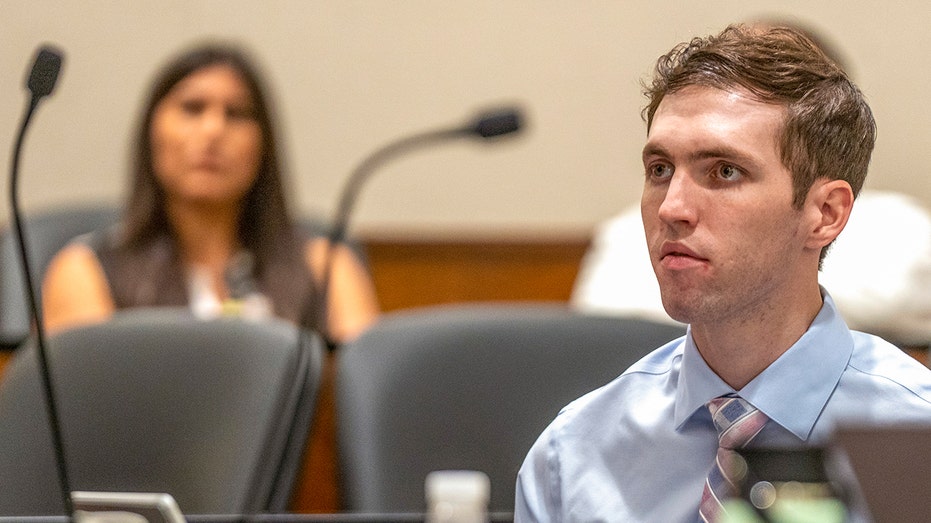
Prosecutors in Utah County are taking a firm stand against what they describe as continued efforts by the defense to stall proceedings in the high-profile assassination case of conservative leader Charlie Kirk. Nearly nine months after the arrest of 22-year-old Tyler Robinson, the case has yet to advance past a preliminary hearing stage—prompting renewed calls for judicial action to ensure the process moves forward.
Deputy Utah County Attorney Christopher Ballard filed a motion urging Judge Tony Graf Jr. to reject the defense’s request to postpone the preliminary hearing yet again. Prosecutors argue that the law, the public interest, and the rights of the victim’s family all weigh heavily against further delay in a case that has shaken conservatives nationwide.
The Background: A Tragedy at Utah Valley University
The charges stem from the September 2025 assassination of Charlie Kirk during a Turning Point USA event at Utah Valley University in Orem, Utah. Turning Point USA, a nonprofit organization dedicated to promoting conservative values on college campuses, has long been a leading force in mobilizing young Americans around constitutional principles.
Kirk, the organization’s founder and president, was known for his outspoken defense of free speech, limited government, and traditional American values. His killing sent shockwaves through the conservative movement and renewed national debates about political violence and campus security.
Robinson was arrested shortly after the attack and has remained in custody since September 2025. Yet despite the seriousness of the charges, the case remains stalled at the preliminary hearing phase.
What Is a Preliminary Hearing — and Why It Matters
Under Utah law, a preliminary hearing is a foundational step in felony cases. As outlined by the Utah State Courts, this proceeding requires prosecutors to demonstrate probable cause that:
- A crime was committed, and
- The defendant committed that crime.
This is not a trial. The prosecution does not need to prove guilt beyond a reasonable doubt. Instead, it must show sufficient evidence to justify moving the case toward trial.
Only after this hearing can a defendant formally enter a plea and the case proceed into full pretrial and trial phases. In Robinson’s case, because the preliminary hearing has not yet been completed, no plea has been entered.
Originally scheduled earlier this year, the hearing was delayed from the week of May 16 to the week of July 6. Now, prosecutors say the defense is once again seeking to push the timeline further into the future.
The Defense’s Media Argument
At the center of the current dispute is the defense’s effort to block cameras from the courtroom during the preliminary hearing. After Judge Graf denied their motion to prohibit media coverage, Robinson’s attorneys filed an appeal to the Utah Supreme Court.
They subsequently asked the trial court to halt proceedings—known legally as requesting a “stay”—while the appeal is considered.
Prosecutors argue that such a stay is unwarranted under Utah law. According to Ballard’s filing, the defendant must meet three separate criteria to justify delaying criminal proceedings:
- Demonstrate a likelihood of prevailing on appeal
- Show irreparable harm absent a stay
- Establish that a stay is not adverse to the public interest
Ballard’s conclusion was blunt: the defense has satisfied none of these requirements.
“Defendant must satisfy all three elements. He hasn’t satisfied even one. In fact, he ignores this rule,” prosecutors argued in the filing.
Public Trials and the American Tradition
The issue of media access touches on longstanding American principles. The U.S. legal system has traditionally operated under the presumption of open courts, a concept rooted in both the First Amendment and centuries of common law tradition. Public proceedings help ensure transparency, accountability, and confidence in the justice system.
While courts may limit media coverage in certain exceptional circumstances, such restrictions typically require clear evidence that publicity would irreparably prejudice the defendant’s right to a fair trial. Prosecutors argue no such showing has been made here.
Ballard emphasized that much of the evidence prosecutors intend to present has already entered the public domain. Given that reality, he contends, additional media exposure at a preliminary hearing would not create new prejudice.
The Victim’s Family Demands Action
Delays in criminal cases do not affect only prosecutors and defendants. They deeply impact victims’ families.
Charlie Kirk’s widow, Erika Kirk, has formally invoked her rights under Utah’s victims’ rights statutes, which guarantee victims and their families a right to a prompt resolution of criminal proceedings. Utah’s constitutional and statutory protections for victims reflect a broader national effort to ensure justice is not endlessly deferred.
According to prosecutors, further postponements undermine those rights. Ballard’s filing argues that extended delays harm not only the state but also the family seeking closure and accountability.
The principle of a speedy trial is also firmly embedded in American law, protected by the Sixth Amendment to the U.S. Constitution. Although typically invoked by defendants, the broader public interest in timely justice remains a cornerstone of the system.
The Hearsay Dispute
In a separate 51-page filing, Robinson’s attorneys are also challenging Utah’s rules allowing certain hearsay evidence at preliminary hearings. They argue that such statutes are unconstitutional.
Hearsay evidence—statements made outside of court offered to prove the truth of the matter asserted—is generally restricted at trial. However, many jurisdictions permit broader evidentiary standards at preliminary hearings, since these proceedings are designed only to evaluate probable cause rather than determine guilt.
The defense’s constitutional challenge adds another layer of complexity to the case and could potentially set precedent if successful. Prosecutors, however, appear confident that existing Utah statutes governing preliminary hearing evidence will withstand scrutiny.
The Public Interest in Moving Forward
Prosecutors argue that the broader public interest favors allowing the hearing to proceed without interruption. Criminal cases involving political violence carry profound community implications. Swift and fair adjudication reinforces the message that violence—regardless of ideological motivation—will be addressed through the rule of law.
Delays, by contrast, risk fueling speculation, prolonging uncertainty, and undermining confidence in the justice process. In high-profile cases, lengthy pretrial stagnation can become a secondary controversy in its own right.
Ballard’s filing makes clear that if the Utah Supreme Court ultimately believes a stay is justified, that court has authority to impose it. In the meantime, prosecutors argue, there is no legal basis for the trial court to put proceedings on hold.
Media Organizations Prepare to Respond
Attorneys for two coalitions of media organizations—including national outlets—are reportedly preparing responses to Robinson’s appeal. Their involvement underscores the constitutional dimensions of courtroom transparency.
Media access to judicial proceedings is not merely a press issue; it is a public access issue. Open courts allow citizens to observe and evaluate how justice is administered. In politically charged cases, that transparency becomes even more significant.
A Case with National Implications
The assassination of a nationally recognized conservative activist at a university setting has reverberated far beyond Utah. It has intensified conversations about:
- Campus security and political events
- The protection of free speech in higher education
- Political extremism and public safety
- The responsibility of institutions to ensure safe forums for debate
Turning Point USA has continued its outreach and programming since the tragedy, emphasizing resilience and a renewed commitment to its mission. For many supporters, ensuring that justice proceeds without unnecessary delay is part of honoring Kirk’s legacy.
What Happens Next
Judge Tony Graf Jr. must now decide whether to grant the requested stay or allow the preliminary hearing to move forward as scheduled. If the defense’s appeal proceeds, the Utah Supreme Court may weigh in on issues related to media access and procedural standards.
Meanwhile, Robinson remains in custody, and the case remains at a procedural crossroads. A preliminary hearing would finally move the matter into a more substantive phase, potentially setting the stage for a full trial.
For the Kirk family, supporters of conservative activism, and the Orem community, the question is not whether the legal process will play out—but how long it will take.
The Broader Principle at Stake
At its core, this dispute is about more than courtroom cameras or procedural motions. It reflects the tension between a defendant’s rights and the public’s right to open, timely justice.
America’s legal system is built on balancing those interests carefully and deliberately. Defendants are presumed innocent. They are entitled to due process and a fair trial. At the same time, victims deserve timely proceedings, and the public deserves confidence that justice is neither rushed nor endlessly stalled.
Prosecutors in Utah are signaling that, in their view, the balance has tilted too far toward delay. The coming weeks will determine whether the court agrees and moves the case closer to a full and public examination of the evidence.
For a nation increasingly concerned about political violence and accountability, the outcome of these procedural battles may resonate far beyond the walls of a Utah courtroom.
Justice delayed, as the old saying goes, can become justice denied. Whether that warning applies here will soon be decided in a court of law.