Tragedy in Washington State Raises Tough Questions About Child Welfare and Accountability
A heartbreaking case out of Aberdeen, Washington, has left a community grieving and searching for answers after authorities arrested a father accused of killing his 4-year-old son and hiding the child’s remains beneath his own home. The disturbing details, now unfolding in court, have reignited serious concerns about child protection systems, parental accountability, and whether warning signs were missed.
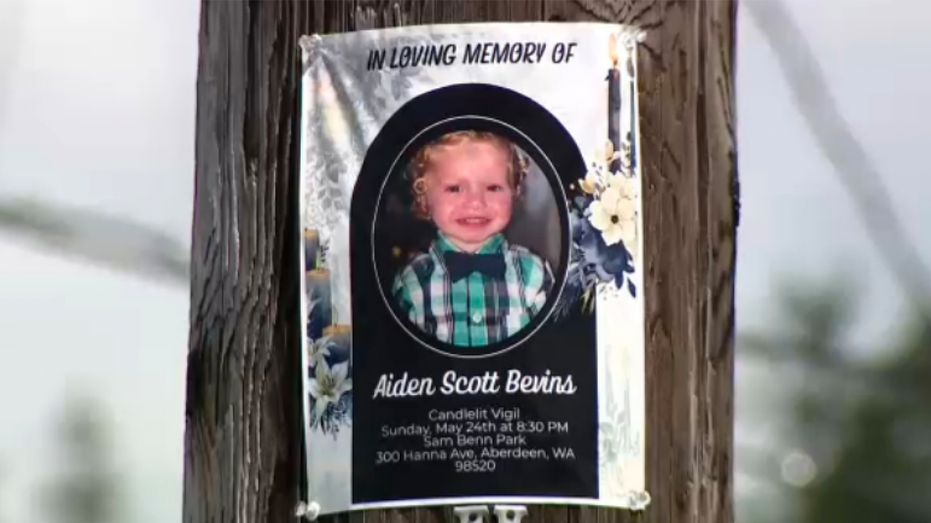
Jacob Bevins, 36, was taken into custody and faces multiple felony charges stemming from the death of his young son, Aiden. Prosecutors allege that after killing the child, Bevins buried his remains under the residence where he lived. The case has shocked even seasoned law enforcement officers and left neighbors reeling.
Charges Filed in Grays Harbor County
According to court filings, Bevins has been charged with:
- Second-degree murder (felony)
- First-degree manslaughter (felony)
- Unlawful disposal of human remains
- Making a false or misleading statement to a public servant
The charges were filed in Grays Harbor County Superior Court, where the case will proceed through the judicial system. Under Washington state law, second-degree murder involves the intentional killing of another person without premeditation, and it carries severe criminal penalties if proven.
Authorities with the Aberdeen Police Department began investigating on May 12 after responding to a report that Bevins’ 6-year-old daughter had been reported missing.
Initial Police Contact and Discovery
When officers first made contact with Bevins regarding his daughter, they ultimately determined that she was safe and in the care of her mother. However, during their interaction, officers noticed something troubling: another child in the household, 4-year-old Aiden Bevins, was nowhere to be found.
When questioned, Bevins allegedly told authorities that Aiden was staying with relatives in another state. That explanation quickly unraveled. Investigators contacted family members, who reportedly informed police that they had not seen the child and had no knowledge of his whereabouts.
Those inconsistencies prompted further questioning, and according to investigators, Bevins eventually made statements admitting involvement in his son’s death. Law enforcement officials later said that he changed his version of events, at one point claiming the boy fell and struck his head while being chased toward the bathroom.
However, the evidence gathered by authorities, including medical findings, reportedly contradicted that explanation.
Remains Found Beneath the Home
On May 15, officers discovered human remains believed to belong to Aiden inside a garbage bag hidden beneath the house. The remains were reportedly buried in a location that neighbors later described as suspicious ground near the structure.
“My daughter said she saw dirt between the tree and the house,” a nearby duplex resident told local reporters. “I have grandkids that come here and play too. I won’t let them go back there.”
Authorities determined that the child had been missing for approximately a year before the discovery.
The medical assessment reportedly concluded that the toddler suffered blunt force trauma injuries—injuries investigators say are inconsistent with the father’s later claim of an accidental fall.
Community Shock in Aberdeen
Aberdeen, a coastal city in Grays Harbor County, is not accustomed to crimes of this magnitude. Known historically as a logging and fishing community, the city is home to just over 16,000 residents. In towns like these, neighbors know each other. Children ride bikes down familiar streets. Families expect a measure of safety and normalcy.
This case has shattered that sense of security.
For many residents, the most disturbing aspect is not only the alleged crime itself but the timeline—how a child could be gone for so long without triggering an earlier discovery.
Foster Care History Raises Serious Concerns
Perhaps the most troubling layer of this tragedy involves the children’s reported history in the foster care system.
According to former foster parents Gary and Magali Lopez, both Aiden and his sister had previously been placed in foster care before eventually being returned to their biological parents. The former foster parents reportedly expressed concerns about the children’s health and safety and said they contacted Child Protective Services multiple times.
In Washington state, child welfare services are overseen by the Washington State Department of Children, Youth, and Families (DCYF). The agency is responsible for investigating allegations of abuse and neglect, placing children into protective custody when necessary, and making decisions regarding reunification with biological parents.
Cases involving family reunification are among the most complex and controversial decisions child welfare agencies make. Federal policy, including standards shaped by laws such as the Adoption and Safe Families Act of 1997, often encourages efforts to reunify children with biological parents whenever possible, provided safety thresholds are met.
But tragedies like this force Americans to ask hard questions:
- Were warning signs overlooked?
- Did previous reports raise red flags?
- Was sufficient follow-up conducted after reunification?
At this stage, officials have not publicly detailed the complete record of agency involvement, but it is clear that the foster care history will become a focal point moving forward.
The Bigger Picture: Child Abuse in America
While this case is uniquely horrifying, it also highlights a broader national issue. According to data compiled by the U.S. Department of Health & Human Services, thousands of children each year are victims of abuse or neglect in the United States.
Blunt force trauma remains one of the most common causes of fatal child abuse in toddlers. Young children are especially vulnerable due to their size, dependency, and inability to protect themselves.
Law enforcement agencies such as the U.S. Department of Justice have repeatedly emphasized the importance of reporting suspected abuse immediately. Teachers, medical providers, and even neighbors serve as critical lines of defense in identifying at-risk children.
This tragedy is a sobering reminder that vigilance matters—and that early intervention can mean the difference between life and death.
Understanding the Criminal Charges
Second-degree murder in Washington does not require proof of premeditation but does involve intent. First-degree manslaughter, on the other hand, may apply if prosecutors believe the death occurred under circumstances demonstrating reckless behavior rather than deliberate intent.
It is not uncommon for prosecutors to file multiple charges in serious homicide cases. These alternative counts allow jurors to weigh varying levels of culpability depending on how they interpret the evidence presented during trial.
The charge of unlawful disposal of human remains reflects the alleged act of concealing the child’s body beneath the home. Meanwhile, making a false statement to a public servant refers to the conflicting stories reportedly told to investigators about Aiden’s whereabouts.
As with all criminal cases in America, Bevins is presumed innocent until proven guilty in a court of law.
Law Enforcement’s Role
The fact that the case came to light only after police responded to a separate missing child report demonstrates the critical role local law enforcement plays in community safety.
The Aberdeen Police Department has not publicly detailed every aspect of its investigative steps, but the discovery unfolded only after officers pressed beyond the initial explanation provided.
Investigative persistence—verifying claims, contacting relatives, and questioning inconsistencies—ultimately led to the discovery of Aiden’s remains.
Cases involving child victims are among the most emotionally taxing for law enforcement professionals. Officers must balance compassion, patience, and relentless attention to detail.
The Human Cost
Beyond legal statutes, agency policies, and court proceedings lies a devastating personal reality: a 4-year-old boy lost his life.
Children should be able to rely on the protection of their parents. When trust within the family unit is shattered so violently, the emotional shockwaves ripple across communities.
Neighbors have expressed anger, heartbreak, and frustration—particularly knowing that other children play in the same yards and walk the same sidewalks where this tragedy unfolded.
A Call for Accountability and Reform
Cases like this demand accountability wherever failures occurred. That means not only holding the accused individually responsible if proven guilty but also ensuring that government agencies involved in child welfare operate with transparency and diligence.
Americans expect that when children are removed due to danger, every possible precaution is taken before returning them to potentially unsafe environments. Reunification should never come at the expense of a child’s life.
While it is too early to draw formal conclusions about systemic missteps, the public deserves answers about:
- The timeline of prior CPS involvement
- The standards used to determine safe reunification
- Whether follow-up monitoring met established protocols
Across the nation, policymakers continue debating how best to balance parental rights with child safety. This case in Washington may well add urgency to those discussions.
What Happens Next
As the criminal case moves forward in Grays Harbor County, prosecutors will likely present forensic evidence, statements made during interviews, and expert testimony regarding the cause of death.
Defense attorneys will have the opportunity to challenge the state’s evidence and offer alternative interpretations of events.
The judicial process may take months—or longer—to reach resolution. But for the community of Aberdeen and those who knew Aiden, the weight of this tragedy will linger far beyond the courtroom timeline.
Protecting America’s Children
At its core, this case is a reminder that protecting children is not solely the responsibility of parents or government agencies—it is a shared national duty.
Americans believe in strong families. Strong families require vigilance, integrity, and accountability. When systems fail or warning signs are ignored, the results can be devastating.
Faith groups, neighbors, educators, and law enforcement each play a part in safeguarding children. If something appears wrong, reporting it may save a life.
The loss of a 4-year-old child under these alleged circumstances is a tragedy that cannot be undone. But if reforms, awareness, and resolve emerge from this painful chapter, perhaps one measure of justice can be achieved.
For now, the people of Aberdeen—and Americans watching across the country—await the truth as the legal process unfolds.
Wake Up America News will continue monitoring this case and any further developments from law enforcement and the courts.