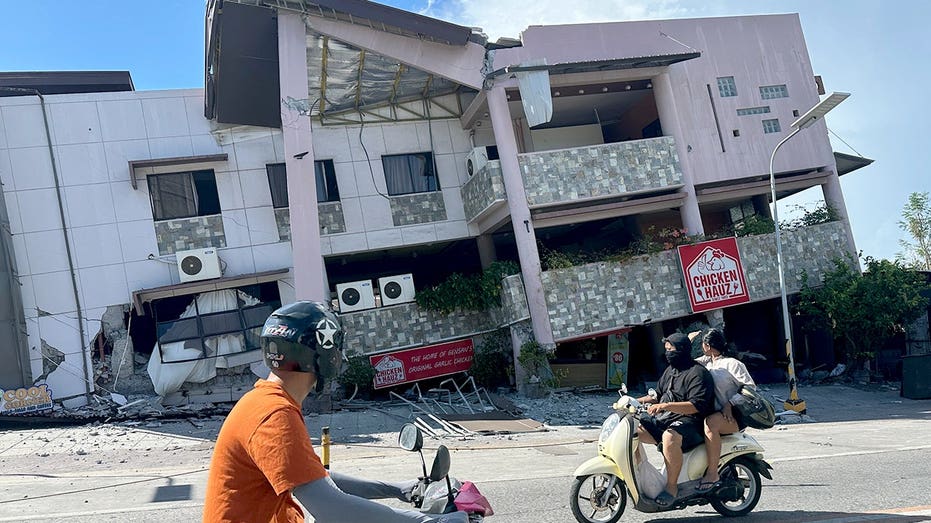
Powerful 7.8 Earthquake Devastates Southern Philippines, Leaving Dozens Dead and Communities in Ruin
A massive 7.8-magnitude earthquake struck just offshore of the southern Philippines early Monday morning, killing at least 32 people, injuring more than 200 others, leveling buildings, and triggering a tsunami that sent waves crashing into coastal communities across Mindanao and beyond. Officials warn that the death toll could rise as search and rescue teams continue digging through rubble in several hard-hit areas.
The powerful tremor, the strongest recorded in the country this year, underscores the ever-present natural threats faced by nations along the Pacific Rim. The United States, a long-standing treaty ally of the Philippines, has stepped forward to coordinate assistance as Manila grapples with the widespread destruction.
Epicenter Off Mindanao Sends Shockwaves Across the Region
According to the Philippine Institute of Volcanology and Seismology (PHIVOLCS), the earthquake struck at 7:37 a.m. local time. Its epicenter was located roughly 32 kilometers (20 miles) southwest of the town of Maasim in Sarangani province, at a depth of approximately 33 kilometers (20 miles) beneath the seabed.
The quake’s shallow depth significantly amplified its destructive power. Buildings shook violently across Mindanao, the second most populous island in the Philippines, home to more than 26 million people. The port city of General Santos, a regional commercial hub with a population exceeding 700,000, sustained particularly heavy damage.
Teresito Bacolcol, director of PHIVOLCS, described the earthquake as the most powerful to hit the Philippines this year and cautioned residents to remain vigilant amid ongoing aftershocks. Structural assessments are underway, as weakened buildings pose a continued risk of collapse.
Buildings Collapse in General Santos
In General Santos, numerous low-rise buildings either crumbled entirely or suffered severe structural failure. Emergency crews scrambled to reach survivors trapped beneath concrete and steel. Among the damaged structures were a supermarket, a warehouse, a grade school, and several commercial buildings.
At least 12 individuals remain missing in the city. Search dogs and heavy equipment were deployed as part of coordinated rescue efforts led by the Office of Civil Defense, which has mobilized teams across the worst-hit provinces.
The city’s international airport was temporarily shut down for inspections following reports of structural concerns. According to the Civil Aviation Authority of the Philippines, at least 17 domestic flights were canceled, disrupting regional travel and supply chains.
“The shaking was very strong and people dashed out of houses into the streets,” said regional civil defense director Rod Sosmeña, who was traveling in General Santos when the quake struck.
The suddenness of the violent tremor caught many by surprise, though the Philippines’ frequent quake activity has instilled a culture of rapid evacuation. That preparedness likely helped prevent even higher casualties.
Landslide in Sarangani Turns Deadly
While collapsing buildings accounted for many of the fatalities, a deadly landslide in the municipality of Glan in Sarangani province claimed 13 lives. Four additional residents in Sarangani perished due to quake-related structural failures.
Landslides are a common secondary disaster following major earthquakes in the Philippines, particularly in mountainous or rural areas where soil saturation and unstable terrain create hazardous conditions. Heavy equipment has been deployed to search through debris and restore road access in affected areas.
Additional fatalities were reported in South Cotabato, Davao Occidental, and on Balut Island. Some victims were killed by falling debris in damaged houses of worship, including a mosque, highlighting the indiscriminate nature of such natural catastrophes.
Tsunami Waves Reach Multiple Nations
Within minutes of the quake, tsunami warnings were issued across parts of the western Pacific. The U.S.-based Pacific Tsunami Warning Center (PTWC), operated by the National Oceanic and Atmospheric Administration (NOAA), reported wave activity across several regions.
In the Philippines, waves reached heights of approximately 1 meter (3 feet) in Sultan Kudarat and Sarangani provinces. A 1.4-meter (4.6-foot) wave was recorded in Kiamba. In one coastal village in Zamboanga del Sur, at least six elevated shanties built on stilts suffered damage from the sudden surge.
Beyond Philippine waters:
- An 83-centimeter wave was measured near Indonesia’s Sulawesi Island.
- Thirty-centimeter waves were detected in Palau.
- Waves up to 20 centimeters were observed on Japan’s Chichijima Island.
Fortunately, the tsunami threat largely subsided about five hours after the initial earthquake. Authorities lifted warnings by mid-afternoon, though coastal communities remain on alert for potential aftershocks.
Schools and Children Caught in the Chaos
In Malita, a rural town in Davao Occidental, more than 100 elementary students and a dozen teachers were attending a flag-raising ceremony on the first day of school when the earthquake struck.
Principal Rosavel Cachuela described scenes of fear and confusion as the ground shook beneath the coconut tree-lined campus. Children screamed and wept, though teachers managed to keep students seated and calm, preventing injuries. A nearby shed collapsed, crushing a parked motorcycle.
The emotional toll of the disaster, particularly on young students returning from a two-month summer break, will likely linger long after the physical rebuilding begins.
National Response Led by President Marcos Jr.
Philippine President Ferdinand Marcos Jr. ordered the immediate suspension of classes in affected areas and instructed national disaster-response agencies to deploy to Mindanao without delay.
“The national government is moving and we will not leave Mindanao behind,” Marcos said in a public statement.
Emergency shelters have been set up to accommodate displaced families, and damage assessments are ongoing. Infrastructure inspections are being conducted on bridges, highways, hospitals, and public utilities to ensure structural safety.
The United States, bound by its Mutual Defense Treaty with the Philippines, expressed readiness to assist with humanitarian and disaster-relief operations. France and New Zealand also offered support.
American assistance could include logistical support, medical aid, and coordination through U.S. Indo-Pacific Command. The rapid offer of cooperation reinforces the enduring alliance between Washington and Manila amid growing regional security tensions in the Indo-Pacific.
Why the Philippines Is So Prone to Disaster
The Philippines sits squarely on the Pacific “Ring of Fire,” a volatile arc of tectonic plate boundaries surrounding the Pacific Ocean. According to Encyclopaedia Britannica, this region accounts for roughly 75% of the world’s active and dormant volcanoes and about 90% of earthquakes.
The Philippine archipelago is positioned at the convergence of several tectonic plates, including the Philippine Sea Plate and the Eurasian Plate. Their constant movement results in frequent seismic events, ranging from minor tremors to devastating earthquakes like Monday’s 7.8-magnitude shock.
In addition to earthquakes and volcanic eruptions, the country is struck by an average of 20 typhoons or tropical storms each year. This relentless exposure to natural disasters places enormous strain on infrastructure, housing, and emergency services.
Infrastructure Challenges and Building Standards
While urban centers in the Philippines have increasingly adopted modern seismic building codes, many residential and commercial structures in provincial areas remain vulnerable. Informal housing communities, often built quickly and with limited engineering oversight, suffer disproportionately during major earthquakes.
The collapse of low-rise buildings in General Santos reflects ongoing questions about enforcement of building codes and urban planning standards. Experts say that consistent enforcement, upgraded materials, and earthquake-resilient design are essential to reducing future casualties.
American engineering firms and disaster-response specialists have long partnered with allies across the Pacific to promote resilience initiatives. Such collaboration not only saves lives but strengthens international partnerships grounded in shared values and mutual support.
Search and Rescue Efforts Continue
As of Tuesday morning, rescue teams were still combing through unstable wreckage in hopes of locating survivors. Heavy machinery worked alongside trained volunteers, while medical teams treated the injured in overburdened local hospitals.
Authorities are urging citizens not to return to damaged buildings without professional structural evaluation. Aftershocks, some already measuring over magnitude 5, continue to be felt throughout Mindanao.
Power outages and disrupted water services have complicated response efforts in several communities. Restoration crews are working around the clock to stabilize essential infrastructure.
A Region on Alert—and an Alliance Tested
Natural disasters do not respect borders. The waves generated by this quake rippled across Southeast Asia and into Japan, serving as a stark reminder of the interconnected nature of the Pacific region.
For the United States, stability and resilience among allies in the Indo-Pacific are both humanitarian and strategic priorities. From joint military exercises to coordinated disaster response, the U.S.-Philippine alliance stands as a pillar of regional security.
In times of crisis, that partnership moves beyond geopolitics. It becomes about saving lives, restoring communities, and demonstrating that free nations stand together when adversity strikes.
Rebuilding After Tragedy
The road to recovery for southern Philippines will be long and challenging. Thousands may require temporary shelter. Schools, markets, airports, and homes will need repairs or complete reconstruction.
Yet history shows that the Filipino people are resilient. Time and again, communities battered by natural forces have rebuilt stronger than before.
As rescue crews continue their courageous efforts, and as international partners—including the United States—offer their support, the focus now shifts from emergency response to recovery and rebuilding.
In a region known for both natural beauty and natural danger, preparedness, strong alliances, and steadfast determination remain the keys to weathering the storms—and earthquakes—that inevitably come.