Minnesota Prosecutor Declines State Charges After Anti-ICE Activists Disrupt Church Service
Dozens of anti-ICE protesters — including former CNN personality Don Lemon — will not face state criminal charges after storming a worship service at a church in St. Paul, Minnesota earlier this year. The decision, announced by the St. Paul City Attorney’s Office, has sparked outrage among church leaders and renewed debate over how America balances the right to protest with the constitutional guarantee of religious freedom.
While federal prosecutors have moved forward with civil rights charges against many of the participants, the city’s determination that available evidence was insufficient under Minnesota law has left congregants questioning whether places of worship are being adequately protected in an increasingly volatile political climate.
The January Disruption at Cities Church
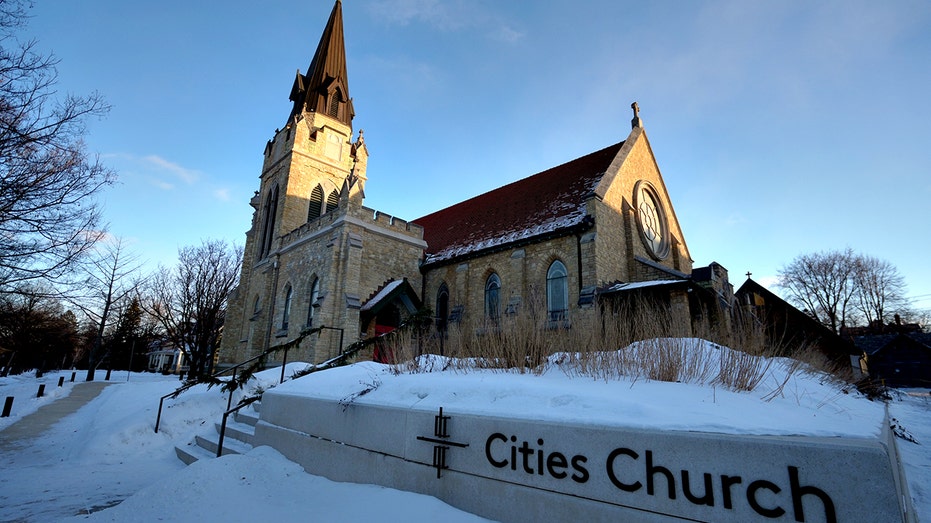
The incident occurred on January 18 at Cities Church in St. Paul. According to church officials, dozens of demonstrators entered the building during a Sunday worship service to protest alleged connections between one of the church’s pastors and federal immigration enforcement efforts.
Videos from the event show activists chanting slogans, including “Justice for Renee Good,” referencing a 37-year-old woman who was fatally shot during a federal operation in Minnesota. The protest centered on claims that a pastor affiliated with the church also served in an official capacity connected to U.S. Immigration and Customs Enforcement (ICE).
Church leaders say the demonstration disrupted worship and frightened families and children attending the service. Although no property damage or physical violence was reported, congregants described the scene as chaotic and deeply unsettling.
In a statement following the incident, lead pastor Jonathan Parnell condemned the intrusion, arguing that labeling such conduct as mere protest ignores the sanctity of religious gatherings.
“According to this logic, it is perfectly acceptable for agitators to invade a mosque, a cathedral, or a temple, intimidate the families and children inside, and shut down their religious gathering — so long as it’s called a ‘protest,’” Parnell said.
Why the City Declined to Prosecute
St. Paul City Attorney Irene Kao announced that her office carefully reviewed video footage, investigative reports, and other available evidence before deciding not to pursue state charges.
Under Minnesota state statutes, prosecutors must meet a defined evidentiary threshold to file criminal complaints. Kao’s office concluded that the available evidence did not meet that standard.
Importantly, the city emphasized that:
- No violence was documented during the protest.
- No property damage occurred.
- No explicit threats to public safety were identified.
- Evidence did not establish criminal conduct beyond reasonable doubt under state law.
Kao stressed that the decision should not be viewed as endorsement of disruptive behavior. Instead, she framed it as a legal judgment based strictly on what prosecutors believed could be proven in court.
“The right to peacefully protest is protected, as is the right to exercise one’s religious beliefs,” she said. “Balancing these equally important rights is paramount.”
Federal Charges Still Pending
While state authorities stepped back, federal prosecutors took a different approach.
The U.S. Attorney’s Office for the District of Minnesota has charged 39 individuals in connection with the church disruption, including Don Lemon and another independent journalist. The charges relate to alleged violations of federal civil rights laws.
Federal authorities are examining whether the protest crossed the line into interference with constitutionally protected religious exercise. Under federal law, the government has authority to pursue cases where individuals are accused of obstructing or intimidating people in the exercise of their faith.
These cases remain pending, and the outcome could clarify the legal boundaries between protest activity and interference with worship.
Freedom of Religion vs. Right to Protest
The controversy spotlights a tension embedded in the First Amendment to the U.S. Constitution, which protects both freedom of speech and the free exercise of religion.
The First Amendment guarantees:
- Freedom of speech
- Freedom of peaceful assembly
- Freedom of religion
- Protection against government establishment of religion
These rights are foundational to American liberty. But conflicts arise when the exercise of one right appears to infringe upon another.
Courts have long held that while protests are protected, they are not unlimited. Time, place, and manner restrictions allow authorities to prevent disruptions that interfere with others’ rights. For example, the Supreme Court has upheld restrictions on demonstrations outside courthouses or clinics when public order or safety is at risk.
The key legal question in cases like this is whether entering a church service during active worship constitutes lawful expression or unlawful interference.
Church Leaders Argue a Dangerous Precedent
Attorneys and leaders affiliated with Cities Church argue that the absence of broken windows or vandalism does not negate the disruptive impact.
To them, the core issue is not property damage but the ability of Americans to worship without fear of ideological intimidation.
They warn that failing to prosecute such conduct could embolden activists to target houses of worship across the country, regardless of faith tradition. Today it may be an evangelical church. Tomorrow it could be a synagogue, mosque, or Catholic parish.
From their perspective, religious services deserve special protection because they involve the exercise of a fundamental constitutional right.
The Political Context: Immigration Enforcement as Flashpoint
This episode did not occur in a vacuum. It unfolded amid intense nationwide debate over immigration enforcement and the role of federal agencies like ICE.
The U.S. Department of Homeland Security, which oversees ICE, has faced sustained protests in recent years over deportations, detention practices, and enforcement actions targeting unauthorized immigrants.
Activists often claim federal authorities overstep their authority or create humanitarian crises. Supporters of enforcement counter that immigration law is federal law and must be applied consistently to maintain border integrity and national sovereignty.
When immigration operations result in injury or death, protests frequently follow. In this case, demonstrators linked their actions to the fatal shooting of Renee Good during a federal operation, demanding accountability and justice.
However, critics argue that targeting a church service crosses a moral and civic boundary — especially when families and children are present.
The Role of Public Figures
The involvement of a nationally known media figure like Don Lemon amplified coverage of the incident and intensified reactions.
Public figures participating in contentious protests often draw additional scrutiny, particularly when events involve constitutionally protected spaces like houses of worship.
While supporters say journalists and commentators have the same rights as any American to protest, others argue that well-known personalities have heightened responsibility to consider the broader implications of their participation.
Legal Standards and Prosecutorial Discretion
Prosecutors at every level of government exercise discretion when deciding whether to bring charges. They must evaluate:
- The strength and admissibility of available evidence
- The likelihood of conviction
- Statutory requirements
- Public interest considerations
Even conduct that many view as inappropriate or harmful may not meet the technical elements required for a criminal conviction under state law.
Critics of the decision argue that trespassing, disorderly conduct, or unlawful assembly statutes could have applied. Supporters of the decision contend that pursuing weak cases can undermine faith in the justice system if prosecutions collapse in court.
A Broader National Pattern?
Across the country, political activism has increasingly moved into previously off-limits spaces — from school board meetings to lawmakers’ homes to religious institutions.
Some observers see a troubling normalization of confrontational tactics aimed not just at public officials but at private citizens exercising their rights.
Others argue that passionate protest has always been part of the American tradition and that vigorous dissent is a sign of democratic health.
The dividing line often comes down to whether protests seek to persuade — or to intimidate.
What Happens Next
For now, the focus shifts to federal court proceedings. Outcomes in those cases could set important precedent regarding interference with religious services.
If federal convictions occur, they may signal stronger national protections for houses of worship. If charges are dismissed, activists may interpret that as validation of similar tactics.
Meanwhile, Cities Church continues its ministry in St. Paul, emphasizing its commitment to peaceful worship and community outreach.
The Stakes for Faith and Freedom
America’s founding principles depend on the coexistence of competing rights. The same Constitution that protects the right to protest also guarantees every citizen the ability to gather for worship without fear.
The challenge lies not in choosing between these freedoms but in ensuring neither swallows the other.
As tensions over immigration and other hot-button issues continue to run high, communities will face difficult questions:
- Where should protest activity take place?
- When does expression become disruption?
- How should local and federal authorities divide responsibility?
For many Americans, the idea that a church service could be interrupted without state consequences raises serious concerns about cultural respect for religious liberty.
Whether Minnesota officials struck the right legal balance is now a matter of public debate — and potentially judicial interpretation at the federal level.
In a nation built on both freedom of speech and freedom of faith, the outcome of this case will reverberate far beyond one church in St. Paul.
Wake Up America News — Your Source for Patriotic News.