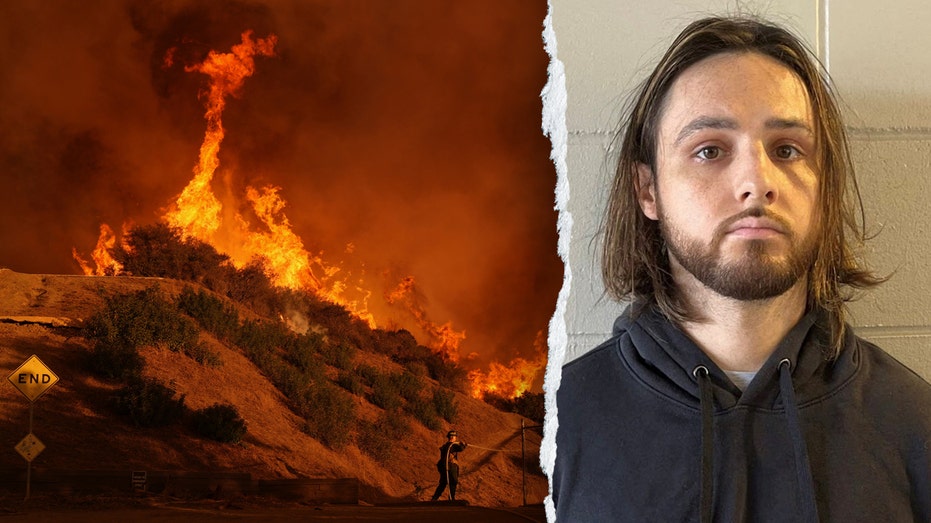
Behavioral Expert Testifies Palisades Fire Suspect Exhibited Signs of “Societal Revenge”
The criminal case surrounding the devastating New Year’s Day 2025 Palisades Fire took a significant turn in court as a veteran behavioral analyst testified that the suspect’s actions align with what experts describe as “societal revenge.”
The accused, Jonathan Rinderknecht, has pleaded not guilty to multiple federal charges stemming from the blaze that contributed to one of Southern California’s most destructive wildfire outbreaks in recent memory. Prosecutors allege that the January 2025 fire helped fuel the broader Palisades inferno, leading to enormous property damage and widespread disruption.
As the trial proceeds in California, testimony from former federal investigator Kevin Kelm has sharpened the focus on motive — specifically, whether ideological resentment and personal grievance may have motivated the alleged arson.
The Charges: Federal Arson and Destruction of Property
Rinderknecht was arrested in October 2025 after a months-long investigation. He faces charges including destruction of property by means of fire, arson affecting property used in interstate commerce, and timber set afire.
The federal arson statute, codified under 18 U.S.C. § 844, makes it a serious felony to maliciously damage or destroy property through fire or explosives, particularly when that property affects interstate or foreign commerce. Such charges can carry lengthy prison sentences if convictions are secured.
Wildfires in California often trigger state-level prosecution, but when federal land, interstate commerce, or broader national interests are implicated, the U.S. Department of Justice may pursue charges in federal court.
The Palisades Fire itself occurred in a region regularly monitored by the California Department of Forestry and Fire Protection (CAL FIRE), which plays a central role in wildfire prevention and investigation across the state. Wildfires not only threaten homes and ecosystems but also strain national resources and emergency response networks.
Expert Testimony: What Is “Societal Revenge”?
Kevin Kelm, who previously served as a supervisory special agent at the Bureau of Alcohol, Tobacco, Firearms and Explosives (ATF) and worked with the FBI’s Behavioral Analysis Unit, provided expert testimony that prosecutors argue sheds light on motive.
According to Kelm, Rinderknecht’s alleged behavior reflects hallmarks commonly observed in cases involving “societal revenge.” This term is used among behavioral analysts to describe individuals who, feeling alienated or powerless, direct anger toward society at large rather than toward a specific individual.
Kelm explained that people driven by this mindset often focus intensely on perceived personal failures or frustrations. These may involve:
- Financial struggles or perceived economic inequality
- Relationship and social difficulties
- Employment dissatisfaction
- Lifestyle resentment or perceived status injustice
- Inability to cope with stressors in daily life
Rather than confronting these issues constructively, the individual may externalize blame. In extreme cases, that resentment is allegedly expressed through destructive acts aimed at society more broadly.
In court, Kelm testified that setting a fire can, in such cases, provide emotional release. The destructive act becomes symbolic — a way to inflict harm on a world the individual believes has wronged him.
The Significance of Behavioral Analysis in Arson Cases
Behavioral analysis plays a unique role in complex criminal investigations. Agencies like the FBI use structured methods developed over decades to profile patterns of thought and behavior. While such testimony does not establish guilt on its own, it can help juries understand potential motive and psychological patterns.
Arson investigations are particularly challenging because fire destroys physical evidence. The ATF, which has national jurisdiction over federal fire and explosives offenses, employs forensic fire investigators trained to reconstruct burn patterns and determine ignition sources. Behavioral evidence can supplement forensic findings when investigators seek to establish intent.
According to government data, arson cases often involve personal grievance. However, large-scale wildland fires — when allegedly set intentionally — represent a rare but especially dangerous subset. Such fires can endanger first responders, devastate infrastructure, and displace thousands.
Alleged Digital Evidence and the Role of Artificial Intelligence
A striking detail in courtroom testimony involved the defendant’s alleged use of ChatGPT to generate what prosecutors described as a “dystopian image” of society.
Kelm testified that the defendant allegedly attempted to use the tool to create an image depicting a barrier separating wealthy individuals from those with fewer economic resources. The imagery, according to the testimony, symbolized deep resentment toward perceived inequality.
Importantly, Kelm noted that the system did not produce responses exactly as the defendant intended. The resulting frustration, he said, demonstrated difficulty managing stress and disappointment.
This element of the case underscores a modern reality: digital footprints can play a significant role in criminal proceedings. From search history to AI prompts, investigators increasingly examine online activity to reconstruct mindset and intent.
While artificial intelligence platforms serve positive and lawful purposes for millions of Americans, prosecutors in this case have highlighted alleged digital interactions as part of a broader pattern of grievance and resentment.
The Broader Impact of the Palisades Fire
The Palisades Fire was one of several major wildfires that struck California during a volatile season marked by dry conditions and high winds. Wildfires in the state have grown in both frequency and severity over recent decades, due in part to environmental policy decisions, land management practices, and climate variability.
According to the National Interagency Fire Center (NIFC), wildfires annually burn millions of acres across the United States, placing extraordinary strain on federal and state resources. The Palisades Fire added to a mounting toll of destroyed homes and disrupted communities.
For residents in affected areas, fires are not abstract statistics. Families lose lifelong investments. Small businesses are shuttered. Insurance markets tighten. Infrastructure is strained.
If prosecutors ultimately prove the fire was intentionally set, the emotional and financial consequences become even more profound. The difference between a natural disaster and a deliberately ignited blaze carries enormous moral weight.
Prosecution and Defense Positions
Rinderknecht has pleaded not guilty to all charges. Under the American justice system, he remains presumed innocent unless and until proven guilty beyond a reasonable doubt.
Federal prosecutors allege that witness statements, surveillance video, photographs, academic literature, and other forms of evidence support their theory of societal revenge as motive.
Fox News Digital reported that requests for comment were made to the defendant’s legal team. As of the latest updates, the defense position has not been detailed in full public proceedings beyond the not-guilty plea.
Defense attorneys in arson cases often challenge forensic conclusions, intent, and the interpretation of behavioral evidence. They may question whether motive analysis overreaches into speculation or whether alternative explanations exist for digital behavior.
Stress, Alienation, and Modern American Life
While the courts must determine individual guilt or innocence, the testimony has raised broader questions about alienation in modern American society.
Experts have long studied the psychological impact of financial instability, social isolation, and economic inequality. When individuals internalize a belief that the system is permanently rigged against them, some may spiral into destructive thinking.
However, the overwhelming majority of Americans facing hardship choose lawful, constructive paths — hard work, community engagement, faith, and family support. Acts of alleged societal revenge, if proven, represent extreme outliers rather than common responses.
Personal grievance does not justify criminal behavior. In a nation built on personal responsibility and the rule of law, destruction of property — particularly on a scale that threatens lives — is a direct assault on community stability.
The Importance of Accountability
Wildfires demand immense bravery from firefighters and law enforcement officers. First responders regularly risk their lives to contain blazes and evacuate families.
When fires are suspected to be intentionally set, the sense of betrayal compounds the tragedy. Resources diverted to preventable destruction could otherwise be used to safeguard communities from natural disasters.
If convicted under federal arson statutes, penalties may include substantial prison time and financial restitution. Federal courts treat arson impacting interstate commerce as a major felony offense, reflecting the recognition that fire can devastate far beyond its point of origin.
A Case That Reflects Modern Complexities
The Palisades Fire case brings together several modern threads:
- The destructive potential of wildfires in the American West
- The evolving role of digital evidence in criminal trials
- The application of behavioral science in courtrooms
- Ongoing societal tensions surrounding economic inequality
It also serves as a reminder that advancements in technology — including artificial intelligence — do not eliminate human responsibility. Tools can be used for good or ill, but accountability ultimately rests with individuals.
What Happens Next
The trial in California is expected to continue as prosecutors present further evidence and the defense mounts its case. Jurors will be tasked with weighing forensic findings, behavioral testimony, and any competing explanations presented in court.
The outcome will not only determine Jonathan Rinderknecht’s legal fate but may also influence how courts handle behavioral analysis and digital evidence in future arson prosecutions.
For communities affected by the Palisades Fire, justice is about more than legal technicalities. It is about affirming that deliberate destruction — if proven — has consequences.
As Americans watch this case unfold, the core principles remain clear: the presumption of innocence, the burden of proof, and unwavering accountability under the law. In a nation that values order, property rights, and community stability, those principles are not negotiable.
In times of crisis, America relies on courage, responsibility, and the rule of law. When those values are tested, our justice system must rise to meet the challenge.
The Palisades Fire trial stands as a sobering example of how personal grievance, if left unchecked, can allegedly escalate into destruction with far-reaching consequences. Whether the prosecution ultimately proves its case remains to be seen — but the stakes for public safety, accountability, and justice could not be higher.